Closing the AI Value Gap: Why Enterprise Transformation Demands Physical and Operational Overhauls
Moving enterprise AI from experimental pilots to measurable balance-sheet returns requires rewiring core workflows, data architectures, and industrial operations.

Enterprise artificial intelligence is reaching an inflection point where isolated software pilots must give way to systemic operational redesigns to yield measurable financial returns.
The Shift from Pilot Projects to Measurable Returns
For the past two years, boardrooms across the world have poured substantial capital into generative artificial intelligence. Much of that early spending went toward exploratory sandboxes, proof-of-concept software, and productivity tools deployed at an individual level. While these initiatives demonstrated technological novelty, they frequently failed to register on balance sheets or improve operational efficiency in a defensible way.
Now, the enterprise landscape is undergoing a necessary recalibration. Leaders are shifting their attention away from mere adoption and toward value realization. This transition requires answering difficult questions about how software investments translate into tangible unit-cost reductions, faster cycle times, and expanded operational capacity. Merely introducing external application programming interfaces or conversational interfaces on top of existing tools rarely delivers structural change. Instead, organizations are discovering that extracting commercial value from advanced models requires deep operational integration, where algorithmic capability directly influences how work is executed.
Moving beyond the pilot phase exposes the gap between technology demonstrations and industrial reality. Models that function cleanly in synthetic testing environments often struggle when confronted with messy enterprise environments, fragmented legacy record systems, and dynamic field conditions. To turn speculative spending into durable returns, organizations must approach intelligence as a foundational capability rather than an elective software layer.
Redesigning Operating Models Instead of Bolting On Tools
One of the most persistent errors in enterprise technology adoption is the tendency to superimpose modern digital tools directly onto legacy processes. When applied to machine learning and agentic systems, this superficial approach generates friction rather than productivity. Introducing automated reasoning into a workflow that was originally designed around manual paper handoffs, siloed approvals, and disconnected spreadsheets simply automates administrative dysfunction.
Achieving measurable returns demands that organizations dismantle and redesign their underlying workflows. This means mapping operational pathways from end to end and determining where autonomous decision-making can replace manual handoffs entirely, rather than merely assisting an employee at a single workstation. When an algorithmic system can autonomously ingest sensor telemetry, evaluate failure risks, schedule field technicians, and reserve warehouse parts, it eliminates intermediate coordination delays.
However, process redesign also requires addressing foundational data debt. Advanced models depend heavily on the quality, freshness, and accessibility of operational records. If asset maintenance histories, network logs, and inventory levels are isolated across disparate internal platforms, even sophisticated autonomous agents cannot take dependable actions. Organizations that achieve the highest returns are systematically refactoring their data estates, converting dormant records into real-time pipelines that can be safely accessed and acted upon by software agents.
Southern Europe as an Infrastructure and Enterprise Hub
While Silicon Valley and northern European hubs frequently dominate discussions of artificial intelligence software development, the physical deployment of enterprise AI is increasingly concentrated in Southern Europe. Spain, in particular, has emerged as a crucial market for testing and scaling these initiatives across core industries such as telecommunications, banking, utilities, and logistics.
Several structural factors explain this momentum. The Iberian peninsula combines access to expanding renewable energy resources with a dense concentration of global telecommunications infrastructure and submarine cable landings. This makes the region an attractive destination for high-capacity data centres and industrial cloud clusters, creating local computational capacity with lower latency. Furthermore, Spain's dominant corporate sectors—heavy infrastructure, international banking networks, and distributed utilities—are asset-intensive businesses that stand to gain the most from process modernization.
In these environments, artificial intelligence is not deployed simply to generate customer-facing text or draft internal emails. It is embedded directly into physical networks and power infrastructure. Telecommunications operators are deploying machine learning to predict cell tower traffic surges and autonomously manage power consumption across base stations. Utility operators are integrating spatial models to monitor distributed solar installations and high-voltage transmission corridors. These capital-intensive environments provide clear metrics for return on investment, as small percentage gains in uptime or energy efficiency yield millions of euros in recurring savings.
From Isolated Agents to Orchestrated Systems
Early enterprise deployments often relied on single-task tools, such as an isolated customer support chatbot or an individual code-completion plugin. While useful for specific tasks, these point solutions remain isolated within specific teams and fail to alter broader corporate productivity. The market is now shifting toward multi-agent orchestration, where specialized models coordinate across functional boundaries to execute complex operational workflows.
In an orchestrated environment, individual models perform narrow, defined tasks while communicating with one another through shared enterprise protocols. For instance, an anomaly-detection system monitoring a telecommunications fiber route does not simply alert an engineer. It collaborates with an inventory agent to verify the availability of replacement optical transceivers, queries an enterprise resource platform to assess contractor schedules, and prepares a verified dispatch request for a field supervisor.
Moving from standalone pilots to orchestrated agentic networks requires strict systems engineering. Enterprise architects must construct deterministic boundaries around non-deterministic language and reasoning models. This involves building rigorous API gateways, establishing automated verification checks, and implementing fail-safe mechanisms that trigger human intervention whenever operational uncertainty exceeds defined parameters. Without these guardrails, autonomous systems risk compounding errors across interconnected enterprise applications, turning minor data discrepancies into systemic operational disruptions.
Establishing Governance, Trust, and Operational Safety
As organizations grant software systems greater autonomy over commercial operations and physical assets, governance moves from a theoretical legal compliance exercise to a primary risk management concern. Autonomous decisions that affect supply chains, network routing, or regulatory compliance must remain auditable, explainable, and secure against external manipulation.
The challenge of securing enterprise systems extends beyond traditional perimeter network defense. Incorporating predictive models and automated reasoning engines introduces novel threat vectors, such as indirect prompt injection, data poisoning within fine-tuning pipelines, and unexpected hallucination cascades in critical workflows. For heavily regulated sectors like financial services and public infrastructure, unexplained algorithmic outputs represent significant financial and operational liabilities.
To manage this transition responsibly, organizations are establishing formal validation frameworks that evaluate software agents based on their decision boundaries. High-consequence decisions, such as taking a power substation offline or modifying credit limits, continue to require deterministic human sign-off. Meanwhile, lower-risk internal tasks can operate with higher levels of autonomy. Developing clear governance protocols enables enterprises to scale automated systems without risking regulatory penalties or customer trust. As highlighted in a briefing organized by the Financial Times, navigating this transition requires executives to coordinate technology, risk management, and operational leadership under a unified governance strategy.
Why It Matters
For field service technicians, telecommunications engineers, and data centre operators, the shift from experimental AI to operationalized systems directly changes daily work. The true return on enterprise technology investments is rarely realized within corporate headquarters. It is proven out at the physical edge, where digital workflows meet physical assets.
In telecom networks and data facilities, automated systems are transforming preventative maintenance into prescriptive, real-time intervention. Instead of relying on static maintenance manuals or reactive emergency tickets, field engineers increasingly work alongside context-aware systems running on mobile devices or augmented reality interfaces. These systems synthesize operational telemetry, identify equipment wear patterns, and deliver verified repair steps directly to technicians on-site.
Furthermore, as computational clusters expand to support distributed model inference, data centre facilities face heightened power and cooling demands. Managing these operational constraints requires automated monitoring capable of balancing compute loads against power grid fluctuations in real time. For the workforce tasked with building, operating, and maintaining modern enterprise infrastructure, the maturation of AI offers practical tools that streamline diagnostic tasks, reduce manual coordination, and safeguard physical network reliability.
More from Trends
RSS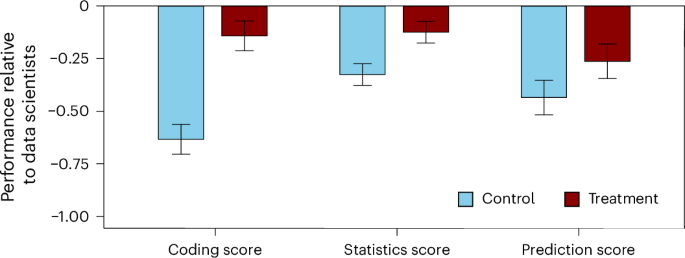
The Exoskeleton Dilemma: Why Generative AI Boosts Performance Without Building Skill
A randomized trial reveals that while AI helps non-specialists complete technical work, the capability vanishes the moment the tool is removed.

Anthropic Files for IPO, Revealing Rocketing Enterprise Revenue and $600 Billion in Compute Commitments
Anthropic's IPO filing shows revenue topping $16 billion in early 2026, paired with unprecedented long-term compute contracts and tightly held founder governance.
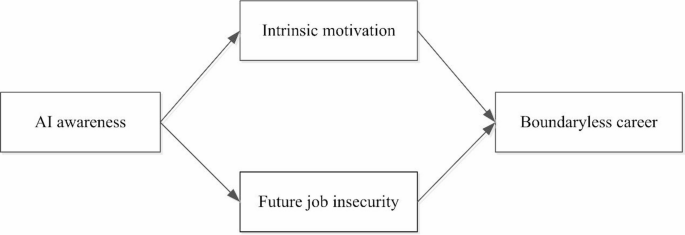
The Boundaryless Worker: How AI Awareness Is Rewiring Early Career Strategy
New research shows students aware of AI are abandoning traditional career ladders, propelled by equal parts technical curiosity and fear of automated displacement.