Auditing Medical Bias: Why Foundation Models Struggle with Clinical Fairness
A comprehensive review reveals how foundation models inherit and amplify healthcare disparities, exposing critical gaps in clinical testing and safety benchmarks.
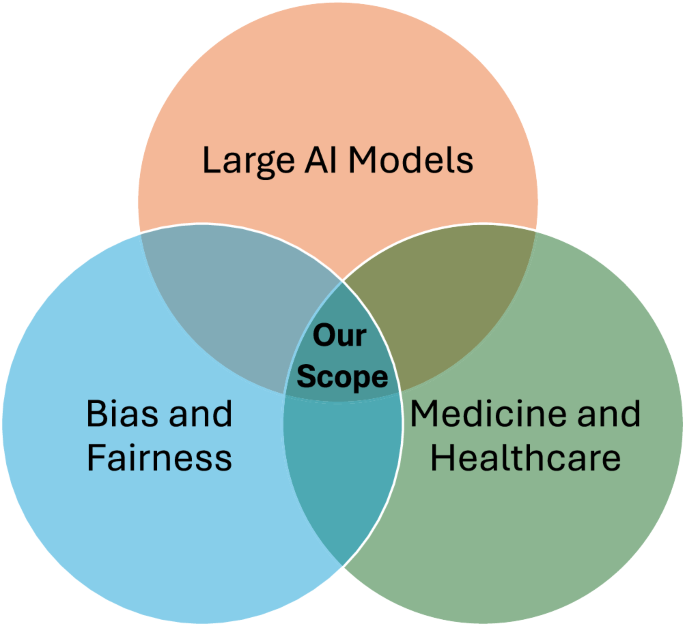
A comprehensive review of 92 studies finds that medical foundation models suffer from pervasive demographic biases across specialties, compounded by fragmented evaluation standards and a lack of real-world clinical validation.
The High-Stakes Shift to Medical Foundation Models
Artificial intelligence in healthcare is undergoing a structural transition. For years, medical machine learning relied on narrow, task-specific architectures designed to perform single functions, such as segmenting lung nodules in computed tomography scans or classifying skin lesions from dermatological photographs. Today, general-purpose foundation systems, including large language models and vision-language architectures, are rapidly displacing these single-purpose tools.
Because these large models are trained on massive, internet-scale datasets alongside institutional records, they exhibit broad clinical capabilities out of the box. Healthcare organizations and software providers are already testing them across three primary operational domains: clinical decision support, administrative medical documentation, and direct-to-patient communication. In diagnostic support, models assist doctors by synthesizing patient histories and suggesting differential diagnoses. In documentation, they summarize complex consultation notes, translate medical jargon, and draft electronic health record entries. In patient-facing roles, conversational agents triage symptoms and explain prescription instructions.
Yet, this generalist flexibility introduces severe failure modes. Unlike narrow models, whose inputs and outputs are tightly bounded, large generative models operate across unstructured natural language and multimodal inputs. When bias emerges in these systems, it is rarely confined to a single classification error. Instead, it alters clinical reasoning paths, introduces subtle stereotyping into clinical summaries, and generates disparate treatment recommendations depending on how a patient is described.
How Algorithmic Bias Manifests in Clinical Practice
Medical bias in artificial intelligence is not an abstract statistical error. In a clinical environment, it directly affects patient outcomes, resource allocation, and diagnostic accuracy. A systematic examination of the literature reveals that bias in foundation models spans virtually every major clinical specialty, from cardiology and oncology to psychiatry and triage.
Demographic disparities frequently appear along lines of race, ethnicity, biological sex, gender identity, age, and socioeconomic status. For example, when models are presented with identical clinical symptoms but varying demographic markers, their diagnostic confidence and treatment paths often diverge. In respiratory and cardiovascular scenarios, systems have been observed recommending less aggressive diagnostic workups or lower levels of pain management for minority demographic groups, mirroring documented historical disparities in conventional medicine.
These models do not simply invent biases; they inherit and amplify them from their training corpora. Foundational models absorb clinical guidelines that may incorporate outdated, race-adjusted diagnostic corrections, such as historical formulas for estimated glomerular filtration rate or pulmonary function tests that artificially adjusted baseline metrics based on race. Furthermore, medical literature itself contains structural publication biases, with clinical trials historically underrepresenting women, elderly patients, and non-white populations. When an AI processes this literature without corrective framing, it treats historical neglect as normative clinical reality.
Multimodal models introduce additional vulnerabilities. Vision-language models trained on diagnostic imaging paired with clinical text have demonstrated an ability to infer patient race or gender from radiological scans alone, even when those demographic features are invisible to human clinicians. When these latent demographic predictions influence downstream diagnostic outputs, the model can produce lower sensitivity or higher false-negative rates for specific patient populations, particularly on underrepresented skin tones in dermatology or atypical symptom presentations in female cardiovascular patients.
The Evaluation Crisis: Fragmented Metrics and Static Vignettes
Despite a rapid surge in academic interest, the scientific community lacks a unified, rigorous methodology for detecting bias in clinical foundation models. Current research efforts remain siloed, fragmented across different medical subdisciplines, computer science laboratories, and sociological frameworks. Each community evaluates model fairness using mutually incompatible definitions.
One fundamental problem is the reliance on synthetic vignettes. A significant portion of existing bias research evaluates models by feeding them written clinical case vignettes and programmatically swapping demographic words, such as changing "male" to "female" or modifying a patient name to imply a specific ethnic background. While this counterfactual testing is valuable for demonstrating localized prompt sensitivity, it fails to replicate real-world clinical complexity. In actual hospital workflows, demographic details are rarely presented as isolated variables; they are intertwined with lab results, insurance coverage, social determinants of health, and unstructured physician observations.
Moreover, quantitative metrics for fairness are often in direct mathematical conflict with one another. A model optimized for demographic parity, ensuring equal positive prediction rates across all groups, often violates calibration metrics, which require that a given risk score reflects the same probability of disease regardless of group membership. Because standard engineering benchmarks prioritize easily computed mathematical parity over clinical relevance, a model that appears fair on a computer science dashboard may perform dangerously in an intensive care unit.
Automated bias detection remains rudimentary. Most clinical evaluations rely on manual review or small, curated test suites that cannot keep pace with the iterative updates made to commercial proprietary models. As a result, systems deployed in pilot hospital programs often operate without continuous auditing for demographic drift or equity harms.
Why Mitigation Techniques Fall Short of Real-World Safety
Efforts to mitigate bias in foundation models generally occur across three stages: pre-training data curation, fine-tuning and alignment, and inference-time engineering. However, each intervention presents technical and clinical trade-offs that have yet to be resolved.
At the pre-training stage, attempting to balance datasets by filtering out biased sources or artificially oversampling underrepresented demographics is logistically challenging. Medical data is heavily restricted by privacy regulations such as HIPAA and GDPR, meaning that high-quality, diverse clinical data cannot be easily aggregated at the scale required to train multi-billion-parameter models. When developers rely on open-source web scrapes to reach data volume targets, toxic commentary and unverified medical advice inevitably seep into the training set.
During alignment, developers frequently apply reinforcement learning from human feedback and supervised fine-tuning using clinical instruction sets. While this can suppress overtly discriminatory language, it often produces a phenomenon known as superficial alignment. The model learns to avoid explicit bias in straightforward conversational settings, yet the underlying clinical reasoning remains skewed when tested with complex, multi-layered clinical histories. In some cases, aggressive safety filtering leads to clinical refusal, where the model declines to provide necessary diagnostic information for complex demographic groups out of an over-calibrated avoidance of controversial topics.
Inference-time solutions, such as prompt engineering and post-hoc output filtering, offer accessible fixes for healthcare organizations that rely on closed-source third-party APIs. Prompts instructing a model to "act as an unbiased physician" or evaluate patients strictly on physiological criteria can reduce variance in simple tests. However, these techniques are fragile. Small modifications to input wording, token ordering, or user phrasing can bypass prompt-based guardrails, rendering them inadequate for enterprise medical software.
Toward Standardized, Deployment-Aware Frameworks
Addressing algorithmic bias in healthcare requires moving past isolated academic exercises and developing reproducible, deployment-aware validation pipelines. As detailed in a scoping review published in Nature, researchers analyzed 92 studies on the topic and concluded that medical bias must be treated not as an isolated software bug, but as an intersectional challenge shaped by architecture design, training data governance, clinical context, and systemic healthcare disparities.
Progress requires several foundational shifts in how medical AI is developed and audited:
1. Standardized Clinical Equity Benchmarks: The medical and technical communities must establish public, multi-institutional evaluation suites that test models against diverse, real-world clinical tasks rather than simple text substitutions. 2. Transparent Training Provenance: Model developers must provide comprehensive documentation detailing the demographic composition, geographic distribution, and institutional sources of training datasets. 3. Longitudinal Deployment Audits: Static evaluations prior to deployment are insufficient. Systems must be continuously monitored for performance disparities across patient cohorts once integrated into operational clinical software. 4. Interdisciplinary Evaluation Teams: AI safety cannot be validated solely by software engineers. Clinical specialists, bioethicists, nursing staff, and patient advocacy representatives must participate directly in defining fairness criteria for specific use cases.
Without these structural changes, the rapid adoption of foundation models risks cementing historical inequities into the digital infrastructure of modern healthcare.
Why It Matters
For enterprise operators, field technicians, and infrastructure teams supporting AI deployments, algorithmic bias is not merely a theoretical ethics concern; it is an operational reliability and compliance risk. As healthcare systems and industrial operators integrate foundation models into edge devices, wearable diagnostic tools, and telemetry analytics, model outputs directly drive physical workflows.
If underlying foundation models alter their behavior based on uncalibrated variables, downstream systems fail unpredictably. For organizations deploying AI agents at the network edge, ensuring consistent performance across diverse input distributions is critical to maintaining regulatory compliance, avoiding legal liability, and guaranteeing system safety. Building robust data pipelines, edge-level monitoring, and reliable audit logs will be as vital to enterprise operations as the compute hardware running the models.
More from Trends
RSS
Mapping Cellular Recruitment: How Interpretable AI Decodes Spatial Biology
A deep learning framework called SPACER reads spatial transcriptomics data to reveal how cells recruit one another, offering clear rules for cancer immunity and therapy.
Dendritic AI: How Brain Architecture Unlocked a 50-Million-Token Context Window
By replicating the non-linear processing of biological dendrites, researchers built a foundation model capable of processing 50 million tokens with lower compute.

Inside China's Relentless Drive for Scientific and Technological Primacy
China's state-backed push into fundamental research, semiconductors, and cost-efficient AI is systematically reshaping global technology competition.
