Dendritic AI: How Brain Architecture Unlocked a 50-Million-Token Context Window
By replicating the non-linear processing of biological dendrites, researchers built a foundation model capable of processing 50 million tokens with lower compute.

Researchers have redesigned artificial intelligence attention mechanisms based on the branching structure of biological dendrites, enabling foundation models to handle 50-million-token contexts while significantly lowering compute requirements.
Moving Beyond the Point Neuron
For decades, artificial intelligence treated the biological neuron as a simple point. In standard machine learning architectures, artificial neurons gather incoming inputs, multiply them by static weights, sum them up, and pass the result through an activation function. This point-neuron abstraction, originally popularized by early cybernetics and perceptron models in the mid-twentieth century, proved capable of astonishing scale. By stacking billions of these simplified nodes into deep networks, computer scientists created modern large language models.
However, this simplification came at a steep cost. As models grew, their capacity to handle long context windows hit severe mathematical and computational barriers. In conventional transformer architectures, the self-attention mechanism compares every single token against every other token. This process scales quadratically in its raw form, consuming vast amounts of graphics processing unit memory and electricity.
While engineering teams have deployed tricks like sliding-window attention, state-space models, and linear approximations to stretch context lengths, the fundamental premise remained unchanged. Intelligence was presumed to emerge from massive networks of simple nodes. Neurobiologists have long known, however, that real brain cells do not work this way. A single mammalian pyramidal neuron is not a point. It is an intricate, branching tree whose individual branches perform complex, independent calculations long before signals ever reach the cell body.
How Dendritic Branches Mirror Attention
A multidisciplinary research team has demonstrated that this missing biological nuance directly mirrors the most successful component of modern AI: the attention mechanism. Rather than mapping artificial attention to networks of point neurons, the researchers mapped it to the internal machinery of dendrites.
Dendrites are the branch-like extensions of a neuron that receive signals from other cells. In biological tissue, these branches do not passively conduct electricity. Instead, local regions within a dendritic tree can generate their own localized electrical spikes. They amplify certain inputs, suppress others, and carry out non-linear operations. In functional terms, a single dendritic branch can act like a logic gate or a filter, prioritizing specific combinations of sensory data based on context.
The researchers discovered that the mathematical equations governing non-linear dendritic computation match the matrix operations found inside multi-head attention. In a transformer, queries and keys interact to select which values deserve computational focus. Inside a biological neuron, synaptic inputs along a single dendritic branch modulate one another, allowing the cell to selectively gate and route incoming information.
By viewing attention not as an artificial mathematical trick, but as an evolved biological function carried out inside individual cells, the team developed a theoretical framework for intra-neuronal complexity. This biological parallel showed that artificial networks could pack far more representational power into fewer nodes, provided those nodes were granted the internal computational structure of actual dendrites.
A 50-Million-Token Context Window
To prove the concept, the researchers built a hybrid-attention foundation model that incorporates dendritic-inspired sparse computation. Rather than calculating full, dense attention across an entire sequence, the model relies on dynamic, branch-like routing. The system activates only the computational paths relevant to the current query, mirroring how a biological neuron fires selective dendritic segments while leaving others dormant.
The practical result is an unprecedented leap in context processing. The dendritic-inspired architecture demonstrated stable operation across a 50-million-token context window. That volume of text corresponds to roughly 40 full sets of the complete works of William Shakespeare, or tens of thousands of technical manuals ingested simultaneously.
Crucially, the architecture avoids the memory blowouts typical of existing transformers. By borrowing the brain's internal sparsity, the model maintains high-fidelity retrieval across long sequence lengths without demanding an exponential increase in high-bandwidth memory. In standardized long-context retrieval benchmarks, the model retained key details placed across its vast window, circumventing the "lost in the middle" phenomena that plague dense attention models.
This structural sparsity addresses the critical hardware challenge facing frontier AI labs: memory bandwidth. When an AI processes an ultra-long prompt, the key-value cache expands rapidly, saturating GPU memory. The dendritic model reduces cache bloat by organizing information into hierarchical compartments, similar to how dendritic trees isolate local signals from the main cell soma.
Re-evaluating the Neuroscience Divide
The breakthrough challenges an increasingly entrenched dogma within the technology industry. For years, leading figures in deep learning argued that neuroscience had outlived its usefulness to modern AI. The dominant philosophy, often summarized as the bitter lesson of computer science, asserted that general methods leveraging raw compute and massive data scaling will always defeat methods based on human or biological intuition.
Foundation models appeared to validate that thesis. Systems like GPT-4 and Claude were built on brute-force statistical learning across massive server clusters, without explicit biological modeling. Yet as frontier labs encounter diminishing returns from simple parameter scaling, hardware limits and energy constraints are forcing a reckoning.
The findings, published in a study in Nature, show that biological principles can solve computational bottlenecks that raw hardware scaling struggles to overcome. Biology faced the same physical constraints millions of years ago: the human brain operates on roughly 20 watts of power while handling continuous, multimodal streams of information. It achieved this efficiency not by scaling a flat network of identical switches, but by maximizing the computational density of its individual components.
By demonstrating that attention mechanisms already possess deep biological analogues, the researchers suggest that future AI progress will not come from treating artificial networks as alien systems of pure math. Instead, uncovering the intra-cellular dynamics of the brain may provide the precise engineering templates needed to make modern foundation models commercially and energetically sustainable.
Why It Matters
For enterprise infrastructure operators, telecommunications providers, and field technicians, context length and memory efficiency are not academic concerns. They dictate the feasibility of deploying AI into production environments.
Industrial applications often generate massive, continuous telemetry streams. A modern data centre, cellular network, or automated manufacturing floor produces gigabytes of log files, sensor metrics, and network state changes every hour. Today, technicians cannot feed weeks of uninterrupted operational logs into a foundation model because the inference cost and memory footprint are prohibitively high. An architecture that natively supports 50-million-token contexts with low compute overhead makes it possible to feed years of system logs, architectural diagrams, and historical trouble tickets into a single inference pass.
Furthermore, this architecture points toward a path away from data centre consolidation. If AI models can run high-context reasoning using sparse, brain-like computations, the hardware barrier to entry drops. Field service engineers working on remote cell towers, substations, or offshore wind farms could run complex diagnostic models on ruggedized, localized edge hardware without requiring constant high-bandwidth uplinks to centralized cloud facilities. By bringing dendritic efficiency to silicon, the next generation of foundation models may finally fit within the tight power and compute envelopes of real-world operations.
More from Trends
RSS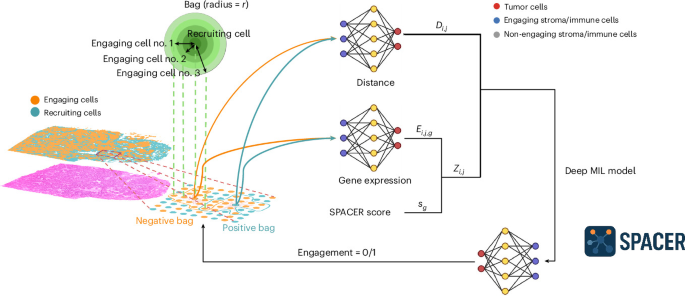
Mapping Cellular Recruitment: How Interpretable AI Decodes Spatial Biology
A deep learning framework called SPACER reads spatial transcriptomics data to reveal how cells recruit one another, offering clear rules for cancer immunity and therapy.
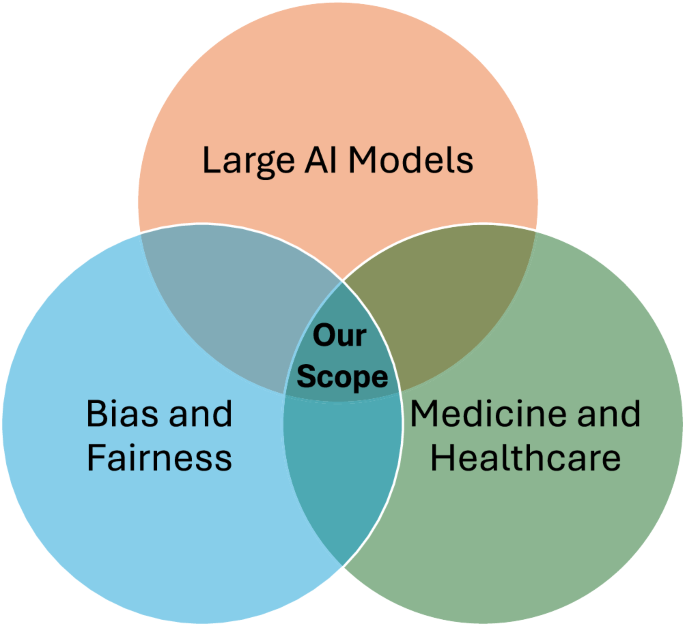
Auditing Medical Bias: Why Foundation Models Struggle with Clinical Fairness
A comprehensive review reveals how foundation models inherit and amplify healthcare disparities, exposing critical gaps in clinical testing and safety benchmarks.

Inside China's Relentless Drive for Scientific and Technological Primacy
China's state-backed push into fundamental research, semiconductors, and cost-efficient AI is systematically reshaping global technology competition.