Inside China's Relentless Drive for Scientific and Technological Primacy
China's state-backed push into fundamental research, semiconductors, and cost-efficient AI is systematically reshaping global technology competition.
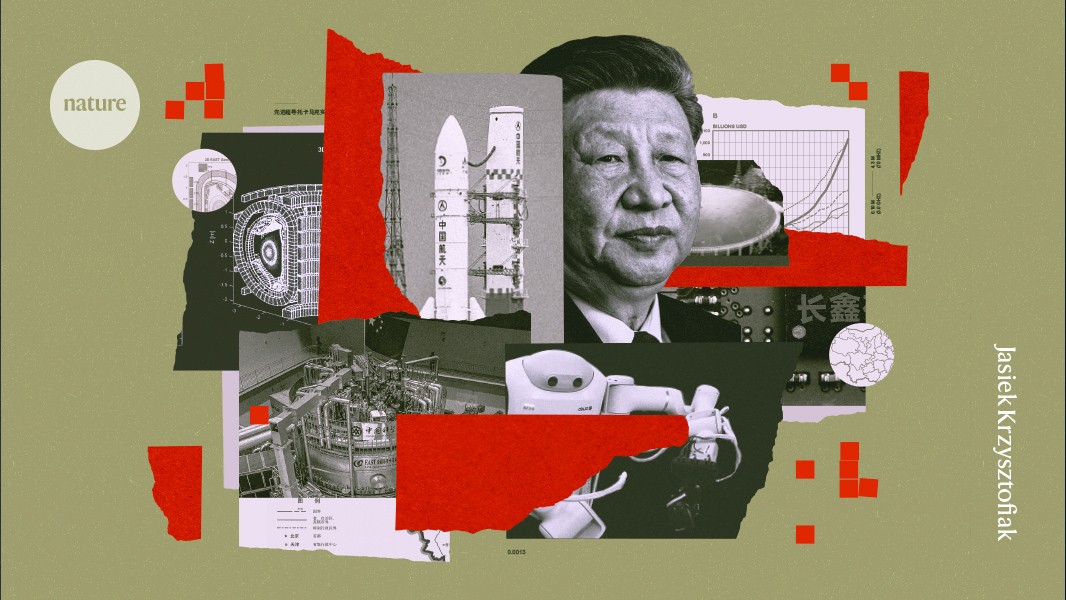
China is closing the technological gap with the West through sustained state-backed R&D investment, long-term policy continuity, and breakthroughs in compute-efficient artificial intelligence.
For nearly half a century, the global scientific hierarchy had a clearly defined apex. Led by the United States and bolstered by European research institutions, Western economies set the tempo for technological development, basic research, and frontier industrialization. That dynamic is shifting. Driven by centralized planning, massive capital allocations, and a strategic pivot toward fundamental science, China has transformed from a low-cost manufacturing hub into a primary engine of global scientific output.
The country's political leadership has made technological self-reliance a central pillar of national strategy. In directives issued to universities, regional governments, and private enterprises, Beijing has called for an aggressive focus on basic science to insulate the country from foreign export controls and secure commanding positions in emerging fields such as artificial intelligence, quantum communications, and advanced semiconductor manufacturing.
A Multi-Decade Pivot Toward Fundamental Research
China's current standing in science represents one of the steepest ascents in modern industrial history. In 1978, at the beginning of its economic opening, the country was virtually invisible in international scientific literature. Elsevier's Scopus database recorded fewer than 120 papers published by China-based researchers that year, accounting for roughly 0.02 percent of global scientific output.
Today, the picture is unrecognisable. Chinese universities and state laboratories frequently sit atop international research indexes. The country leads the world in annual patent filings and produces a dominant share of global research in areas such as synthetic biology, nuclear power engineering, and material sciences. Breakthroughs like retrieving samples from the far side of the Moon and operating experimental nuclear fusion reactors have established China as a peer competitor to Western scientific powerhouses.
The focus of this campaign has matured. In previous decades, national efforts concentrated heavily on applied technology, product engineering, and commercializing existing concepts. Now, the state's five-year plans mandate that a larger share of resources be dedicated to fundamental science, the curiosity-driven, baseline inquiries that form the foundation for future industrial technologies decades before commercial applications emerge.
The Mathematics of R&D Spending
Fueling this transformation is an unprecedented deployment of capital. Over the past 30 years, China's total expenditure on research and development has multiplied roughly one hundredfold. Over the last decade alone, annual R&D spending has grown by an average of more than 10 percent year-on-year.
When measured through purchasing power parity, which adjusts for lower domestic labor and materials costs, China has overtaken the United States in gross domestic expenditure on research and development. While calculations based strictly on foreign exchange rates show China's absolute spending at approximately half that of the United States, the gap is closing rapidly. In 2004, China's dollar-equivalent R&D budget stood at just 8 percent of the US total.
A primary factor behind this velocity is institutional longevity. Unlike Western democracies, where national scientific funding priorities can swing drastically between legislative cycles and shifting presidential administrations, China operates on multi-year, multi-decade timelines. Planners identify strategic bottlenecks, assign resources through state-backed investment vehicles, and sustain those capital commitments even through periods of commercial uncertainty.
This dynamic is starkly visible in the country's semiconductor push. Beginning in 2014, the Chinese government established the National Integrated Circuit Industry Investment Fund, widely known as the Big Fund. Its initial phase deployed roughly $16 billion into chip design and fabrication equipment. After extensive US trade sanctions were enacted in 2022 to restrict China's access to cutting-edge chips and lithography machinery, Beijing accelerated the programme. A third phase launched with an allocation of approximately $50 billion, designed specifically to build an entirely domestic supply chain from raw silicon processing to finished hardware.
Silicon Autonomy and Compute Efficiency
The ripple effects of this technological push are felt most acutely across the global artificial intelligence sector. Western developers have largely pursued a brute-force approach to frontier AI, relying on massive clusters of high-end graphics processing units and exorbitant capital expenditure to train larger models. For Chinese researchers facing trade barriers that restrict access to advanced Western silicon, that route was constrained.
Instead of stalling, Chinese developers adapted by focusing on algorithmic efficiency. In early 2025, Hangzhou-based AI firm DeepSeek released models that rivalled the performance of top-tier Western counterparts while using a fraction of the computing power and financial budget. The release demonstrated that hardware limitations could be offset by software optimizations, efficient training pipelines, and precise mathematical architectures.
This pattern reflects a broader structural evolution within China's innovation base. While the Chinese Academy of Sciences and elite state universities continue to conduct foundational research, commercial innovation is increasingly carried by private companies. Nurtured by state subsidies and protective regulatory environments, domestic firms in electric vehicles, battery chemistry, and enterprise software have become the primary deployment vehicles for newly discovered technologies.
Structural Vulnerabilities in the Innovation Engine
Despite rapid progress, China's research apparatus faces major structural hurdles that could slow its momentum. The pressure to publish quickly and produce measurable outputs has fed widespread issues with research integrity. Academic institutions have struggled with paper mills, citation manipulation, and lax review procedures, forcing authorities to introduce punitive measures against academic fraud.
In addition, cutting-edge biomedical work has encountered scrutiny regarding regulatory oversight and bioethics, highlighted by high-profile failures and trial participant deaths in advanced clinical therapies. As researchers push boundaries in gene editing and advanced biologics, international observers continue to question whether safety frameworks are keeping pace with laboratory capabilities.
Macroeconomic headwinds present another barrier. Slower domestic growth, local government debt pressures, and a cooling property sector threaten to constrain public budgets. At the same time, expanding geopolitical friction has restricted Chinese researchers from collaborating on international projects and cut off access to specific categories of specialized research equipment. If domestic economic conditions force regional governments to scale back planned subsidies, the pace of scientific expansion could moderate.
Yet, as an in-depth analysis by Nature recently documented, the country's overall trajectory remains pointed upward. With targets calling for R&D expenditures to grow by at least 7 percent annually through 2030, China is building a persistent, state-coordinated research architecture designed to withstand external geopolitical pressures.
Why It Matters
For enterprise technology leaders, data centre operators, and field engineering teams, China's scientific pivot carries direct, practical implications. The algorithmic efficiency pioneered by resource-constrained Chinese AI firms proves that high-performance intelligence does not always require massive, power-hungry compute clusters.
This trend accelerates the arrival of localized, edge-based AI models capable of running on compact hardware inside remote telecommunications sites, industrial plants, and utility substations. Field technicians and maintenance teams will increasingly rely on augmented reality headsets and diagnostic tools powered by lightweight models trained on minimal compute.
Furthermore, as China constructs independent supply chains for power grid infrastructure, optical networking, and domestic silicon, global equipment markets will fragment. Organizations managing data centres and critical infrastructure must prepare for divergent technical standards, parallel component ecosystems, and new competitive benchmarks driven by Chinese engineering.
More from Trends
RSS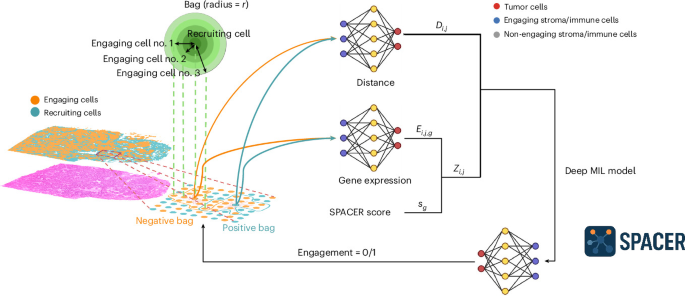
Mapping Cellular Recruitment: How Interpretable AI Decodes Spatial Biology
A deep learning framework called SPACER reads spatial transcriptomics data to reveal how cells recruit one another, offering clear rules for cancer immunity and therapy.
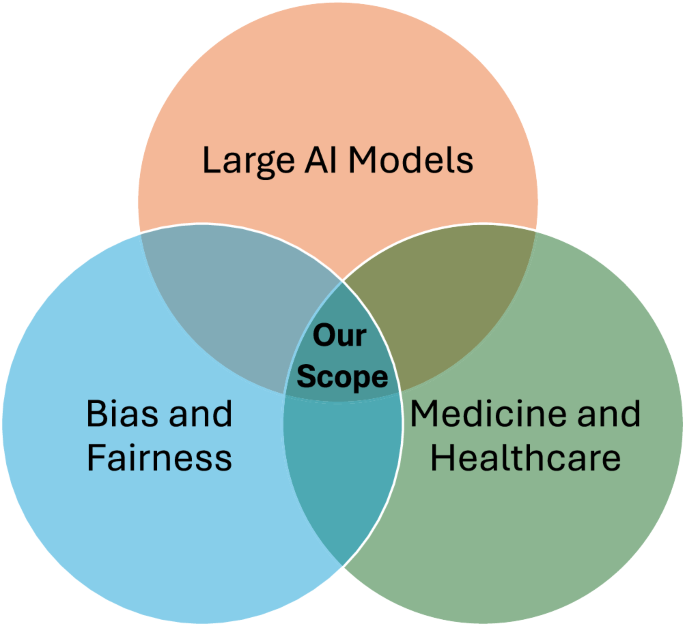
Auditing Medical Bias: Why Foundation Models Struggle with Clinical Fairness
A comprehensive review reveals how foundation models inherit and amplify healthcare disparities, exposing critical gaps in clinical testing and safety benchmarks.
Dendritic AI: How Brain Architecture Unlocked a 50-Million-Token Context Window
By replicating the non-linear processing of biological dendrites, researchers built a foundation model capable of processing 50 million tokens with lower compute.
