Beyond the Compute Wall: Academic AI Shifts Toward Edge Efficiency and Systematic Restraint
New research published across scientific journals marks a pivot from brute-force scale to monitorable reasoning models, edge-tier deployment, and computational degrowth.

Recent peer-reviewed research reveals a decisive shift across the artificial intelligence landscape away from brute-force model scaling and toward operational monitorability, industrial edge deployment, and computational restraint.
For the past several years, the commercial artificial intelligence sector operated under a singular dogma: more compute, larger datasets, and massive parameter counts reliably yield superior intelligence. Hyperscalers poured tens of billions of dollars into sprawling data centre infrastructure, procuring specialized accelerators and securing massive power purchase agreements to feed ever-larger training clusters. Progress was frequently measured in floating-point operations per second and benchmark scores on synthetic reasoning tests.
Yet, beneath the high-profile releases of commercial foundation models, a quiet recalibration has been taking place within academic and applied engineering circles. A survey of recent scientific literature demonstrates that the research community is turning its attention to the hard physical boundaries of this expansion. Instead of treating compute as infinite and efficiency as a secondary consideration, leading researchers are interrogating the systemic consequences of unconstrained scaling. The focus is shifting toward verifiable reasoning, lightweight vertical architectures built for constrained edge devices, and holistic life-cycle assessments of technology itself.
Questioning the Imperative of Infinite Scale
Among the most provocative arguments entering mainstream scientific discourse is the premise that artificial intelligence cannot expand indefinitely without triggering severe ecological and societal penalties. In recent analyses addressing the systemic impacts of automated computation, scholars have begun formulating frameworks for AI degrowth. The argument stems from the undeniable reality of data centre resource consumption. Modern facilities require gigawatts of electricity, millions of gallons of cooling water, and massive supply chains of rare earth minerals and refined silicon, often placing immense stress on regional utility grids.
Proponents of this view argue that the tech industry has conflated computational volume with genuine utility. When massive models are deployed for low-stakes or frivolous applications, the carbon and water footprint of each query represents an inefficient allocation of planetary resources. Instead of treating every technical problem as a nail requiring a trillion-parameter hammer, researchers are arguing for clear boundaries around when, where, and why complex machine learning systems ought to be trained and deployed.
This emerging critique is not an anti-technology stance. Rather, it represents an effort to introduce engineering discipline into a discipline long dominated by venture-backed exuberance. By establishing explicit criteria for when algorithmic automation truly benefits human well-being and environmental stability, the research community is challenging organizations to justify their computational overhead before provisioning another compute cluster.
Auditing the Mechanics of Machine Reasoning
Alongside concerns over physical resource consumption, there is mounting concern regarding the operational transparency of modern reasoning models. As frontier systems transition from simple statistical pattern-matching to multi-step chain-of-thought processing, their internal decision pathways have grown substantially more convoluted. An algorithm may arrive at a correct output through flawed internal logic, or mask subtle hallucinations behind structured, authoritative prose.
In response, researchers are constructing novel paradigms for the monitorability and mechanistic understanding of reasoning models. The goal is to move past post-hoc explainability, where an external tool guesses why a model made an error, and toward continuous, real-time auditing of internal representational states. When a model works through a diagnosis, an engineering failure mode, or a legal brief, systems must be capable of surfacing precisely which latent steps influenced the outcome.
Achieving this level of monitorability is essential before reasoning agents can be safely integrated into critical infrastructure. In sectors like telecommunications switching, aerospace avionics, and high-voltage transmission, an opaque recommendation is worse than useless. It introduces liability. Developing architectures that are inspectable by design allows human supervisors to catch latent logical breakdowns before an automated command executes in the physical world.
Industrial Realities and the Edge Revolution
While cloud-based foundation models command headlines, the physical world operates under strict latency, power, and bandwidth constraints. Nowhere is this tension more evident than in industrial manufacturing and physical infrastructure maintenance. In a high-speed production line or a remote substation, waiting several seconds for an offshore cloud server to process high-resolution video feeds is entirely out of the question. Furthermore, if a communications link drops, operational safety systems cannot simply cease functioning.
Consequently, practical research is increasingly centered on edge-lightweight vertical models. In recent manufacturing studies, engineers have demonstrated how compact multimodal networks can be deployed directly onto low-power edge controllers. In high-speed bottling and packaging operations, for example, localized vision and acoustic models are tasked with detecting minute mechanical anomalies while simultaneously regulating the energy consumption of heavy conveyor motors.
These edge architectures achieve their efficiency by discarding generalized world knowledge. A model monitoring a bottling line does not need to know how to write poetry or analyze 19th-century history. By pruning irrelevant parameters and distilling domain-specific physics into compact networks, engineers can execute multimodal anomaly detection on processors consuming only a handful of watts. This localized inference eliminates data transport bottlenecks, minimizes bandwidth costs, and guarantees deterministic real-time response times.
Grounding Innovation in Physical Life Cycles
This movement toward pragmatic, grounded artificial intelligence is also transforming material science and discovery. Over the past three years, generative models have demonstrated an uncanny knack for proposing millions of theoretical molecular combinations, battery chemistries, and crystal lattices. However, a significant gap quickly emerged between theoretical simulation and physical reality. Many computationally viable candidates turned out to be toxic, exorbitantly expensive to manufacture, or reliant on fragile global supply chains.
Recent scientific investigations are closing this divide by embedding whole-life-cycle sustainability metrics directly into the generative loop. Instead of optimizing solely for performance characteristics, such as tensile strength or energy density, new models incorporate constraints regarding recyclability, thermal stability during manufacturing, and supply-chain accessibility. The AI must evaluate whether a compound can be synthesized using existing chemical equipment without generating hazardous waste streams.
This evolution represents a mature phase of machine intelligence. The field is moving past the stage where raw generative capacity is celebrated for its own sake, advancing into an era where artificial intelligence must conform to the stringent requirements of chemical engineering, environmental law, and commercial economics.
Why It Matters
As highlighted across several recent papers tracked by Nature, the frontier of AI development is becoming deeply intertwined with physical infrastructure, industrial reality, and environmental limits.
For data centre operators and telecommunications providers, this transition carries direct operational implications. The era of assuming endless access to grid capacity is drawing to a close. Facilities managers are increasingly forced to balance AI training workloads against cooling thresholds, local water availability, and peak electrical tariffs. As monitorable, lightweight models prove their worth, infrastructure providers will face growing pressure to shift processing from centralized hyperscale hubs to distributed edge nodes situated at cell towers, switching offices, and enterprise basements.
For field technicians, network engineers, and industrial maintenance crews, the benefits of this shift will be immediate and tangible. Lightweight vertical models can run entirely locally on ruggedized tablets, handheld diagnostic sensors, and augmented reality headsets, operating without a stable internet connection. Instead of relying on a distant, generic chatbot that may hallucinate wiring schematics, in-field staff will be equipped with specialized, deterministic systems capable of diagnosing optical fiber faults, bearing wear, and high-voltage anomalies on the fly. The future of artificial intelligence lies not in unbounded expansion, but in precise, reliable deployment right at the operational edge.
More from Trends
RSS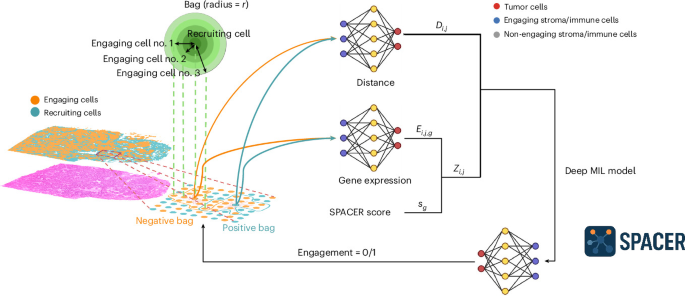
Mapping Cellular Recruitment: How Interpretable AI Decodes Spatial Biology
A deep learning framework called SPACER reads spatial transcriptomics data to reveal how cells recruit one another, offering clear rules for cancer immunity and therapy.
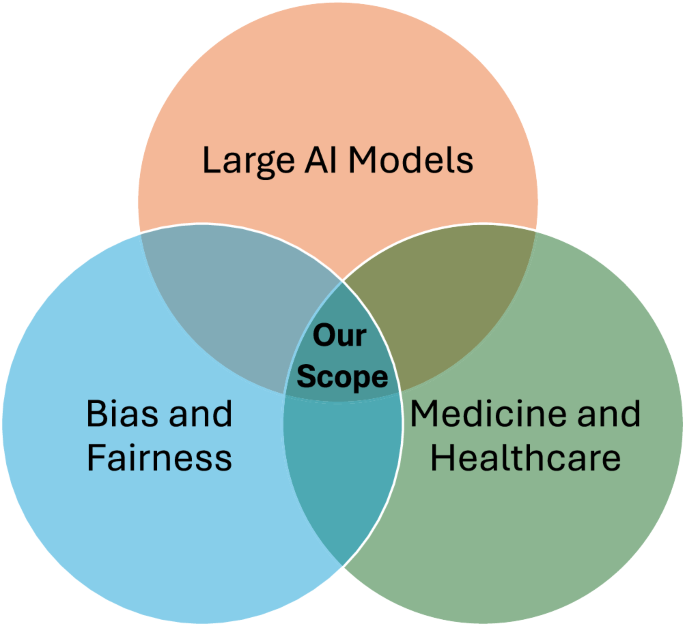
Auditing Medical Bias: Why Foundation Models Struggle with Clinical Fairness
A comprehensive review reveals how foundation models inherit and amplify healthcare disparities, exposing critical gaps in clinical testing and safety benchmarks.
Dendritic AI: How Brain Architecture Unlocked a 50-Million-Token Context Window
By replicating the non-linear processing of biological dendrites, researchers built a foundation model capable of processing 50 million tokens with lower compute.
