Corporate Layoffs Accelerate as Enterprise Budgets Shift to Artificial Intelligence
Global employers across banking, software, and industry are eliminating tens of thousands of desk jobs to free up capital for intensive AI investments.

A sweeping wave of enterprise layoffs across finance, technology, and legacy industry signals that corporate balance sheets are being aggressively reshuffled away from administrative payrolls and directly into artificial intelligence infrastructure.
Corporate restructuring has entered a distinct new phase. Over the past year, major employers across North America, Europe, and Asia have begun eliminating tens of thousands of corporate and back-office positions. Unlike previous downsizing cycles driven by consumer downturns or broader economic stagnation, the current wave of job cuts is happening while balance sheets remain comparatively robust. Chief executives are explicitly pointing to the same catalyst: the rapid deployment of automated systems and the urgent need to divert operational expenditures toward computational power.
From multinational financial institutions to consumer goods producers and legacy tech providers, organizations are executing long-term efficiency drives. Capital that once funded middle management, administrative overhead, and tier-one software engineering is now being redirected into enterprise foundation models, custom internal workflows, and high-performance computing clusters.
The Great Capital Reallocation
The fundamental economics of enterprise technology have shifted. Deploying modern artificial intelligence at scale requires immense initial capital investments, ranging from high-bandwidth memory chips and specialized server racks to direct power generation and custom cooling systems. For large enterprises, funding these multibillion-dollar initiatives without eroding operating margins requires compensatory cuts elsewhere.
Corporate payroll, historically the largest line item on enterprise balance sheets, has become the primary source of operational savings. Instead of waiting for attrition to run its course, executives are restructuring departments to integrate autonomous digital tools immediately. Standardized processes, including basic contract review, data pipeline maintenance, customer intake, and internal reporting, are increasingly managed by software agents. As these tools mature, the human headcount needed to supervise or execute them drops substantially.
This dynamic creates a pronounced substitution effect. The savings achieved by trimming corporate support teams are immediately redeployed to secure access to scarce compute clusters and specialised engineering talent capable of maintaining foundational systems.
Banking and Enterprise Services Lead the Pruning
The financial sector provides the clearest example of this transition. Global banks manage immense volumes of structured information, compliance checks, credit underwriting, and risk assessments, tasks that map neatly onto modern natural language processing and pattern recognition systems.
HSBC is currently weighing an operational overhaul that could eliminate up to 20,000 roles, representing roughly a tenth of its global workforce, as part of an extensive automation roadmap. Standard Chartered has outlined plans to reduce more than 7,000 positions over a four-year horizon to streamline internal workflows and optimize returns. In the United Kingdom, Barclays announced reductions affecting approximately 5,000 support staff. In Japan, Mizuho Financial Group has initiated a decade-long program that could see up to 5,000 jobs phased out as operational automation expands.
This pattern is repeated across enterprise software and fintech. Intuit reduced around 3,000 positions, or 17 percent of its total staff, to sharpen its focus on intelligent product capabilities. Payments company Block cut more than 4,000 roles, amounting to nearly half of its workforce, in a restructuring designed to build leaner operations around machine learning pipelines. In each instance, leadership cited the ability of automated systems to handle transactional volume with far fewer human intermediaries.
Big Tech Trims the Middle to Fund the Datacenter
Even the primary architects of the artificial intelligence boom are adjusting their internal headcounts. Hyperscale cloud providers and software giants are running leaner internal operations to preserve the immense cash flows required to construct next-generation digital infrastructure.
Amazon eliminated 16,000 corporate positions as part of a company-wide push to simplify reporting structures and integrate automation across corporate operations. The company also adjusted staffing within its dedicated frontier research groups, balancing foundational research with commercial pragmatism. Microsoft trimmed approximately 4,800 roles, primarily across its commercial and gaming units, while simultaneously pouring tens of billions into specialized data centres and chip procurement.
Meta presents an even starker contrast. The company has considered restructuring that could reduce its broader workforce by up to 20 percent over time, pivoting resources from experimental hardware efforts like virtual reality toward enterprise hardware and model training. Meta has indicated plans to deploy up to $600 billion toward physical data centre buildouts by 2028. To finance physical infrastructure at that scale, companies are systematically reducing digital overhead, paring down layers of internal management, and automating software maintenance tasks.
Telecommunications and Physical Industries Join the Wave
The consolidation of corporate roles is not confined to software developers and investment bankers. Organizations with sprawling physical networks and traditional supply chains are implementing similar measures.
In the telecommunications sector, where profitability has long been compressed by network upgrade costs, providers are turning to automated systems for network orchestration, customer care, and field dispatch. Belgian carrier Proximus is working through a restructuring aimed at shedding 1,200 positions by 2030 through efficiency programs. Australian operator Telstra reduced 650 roles through a targeted restructuring focused on automating service management.
Industrial and retail giants are following suit. Chemical manufacturer Dow cut 4,500 jobs, or 13 percent of its global payroll, pointing to automation and structural realignments. Hardware maker HP Inc announced plans to trim between 4,000 and 6,000 roles by late 2028. Consumer goods conglomerate British American Tobacco outlined a plan to cut 5,500 direct positions while outsourcing thousands of others to optimize overhead. Even supermarket operator Kroger moved to eliminate approximately 3,000 corporate positions, modernizing its administrative footprint.
Data tracked across international corporate filings by Reuters underscores the sheer breadth of this trend, showing that job displacement is no longer speculative. The impact is hitting legacy back offices, regional support hubs, and corporate headquarters simultaneously.
Why it matters
While corporate offices and remote knowledge workers face sustained contraction, the physical backbone required to sustain enterprise intelligence is experiencing an unprecedented expansion. The capital pulled from white-collar payrolls is pouring directly into power plants, telecommunication backbones, edge computing nodes, and hyperscale facilities.
This migration of capital fundamentally shifts where human labor holds economic leverage. The administrative tasks that dominated office work for decades are being compressed into automated pipelines, but the physical world cannot be automated through software alone. As data centre construction accelerates toward multi-trillion-dollar valuations over the coming years, demand is surging for critical field roles. High-voltage electricians, mechanical cooling engineers, fiber-optic splicing technicians, and industrial automation specialists are becoming the primary bottlenecks for technological progress.
For field operations, telecommunications providers, and facilities teams, the enterprise AI transition is not an era of contraction, but one of intensive deployment. The organizations that thrive in this environment will be those that successfully redirect their resources from managing digital paper to building, maintaining, and powering the physical infrastructure that makes modern computation possible.
More from Trends
RSS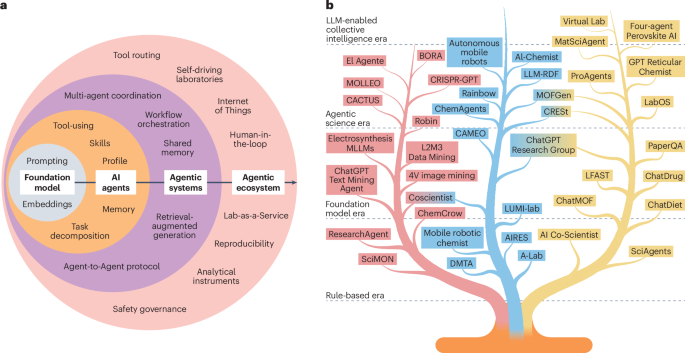
Autonomous AI Agents Step In to Direct Physical Scientific Discovery
Agentic AI is moving from literature search to physical labs, orchestrating simulations, robotic hardware, and iterative experiments to accelerate scientific discovery.

Europe's Industrial Giants Split on How to Capitalise on the AI Boom
Schneider Electric, Siemens, and ABB are pouring billions into the AI infrastructure wave, but divide sharply over whether to acquire software or double down on heavy equipment.
From Observation to Autonomy: How Edge AI Is Reshaping Smart City Infrastructure
Cities are moving past centralized data lakes toward cognitive edge architectures that process sensor data locally, enabling autonomous, real-time civic operations.