From Observation to Autonomy: How Edge AI Is Reshaping Smart City Infrastructure
Cities are moving past centralized data lakes toward cognitive edge architectures that process sensor data locally, enabling autonomous, real-time civic operations.
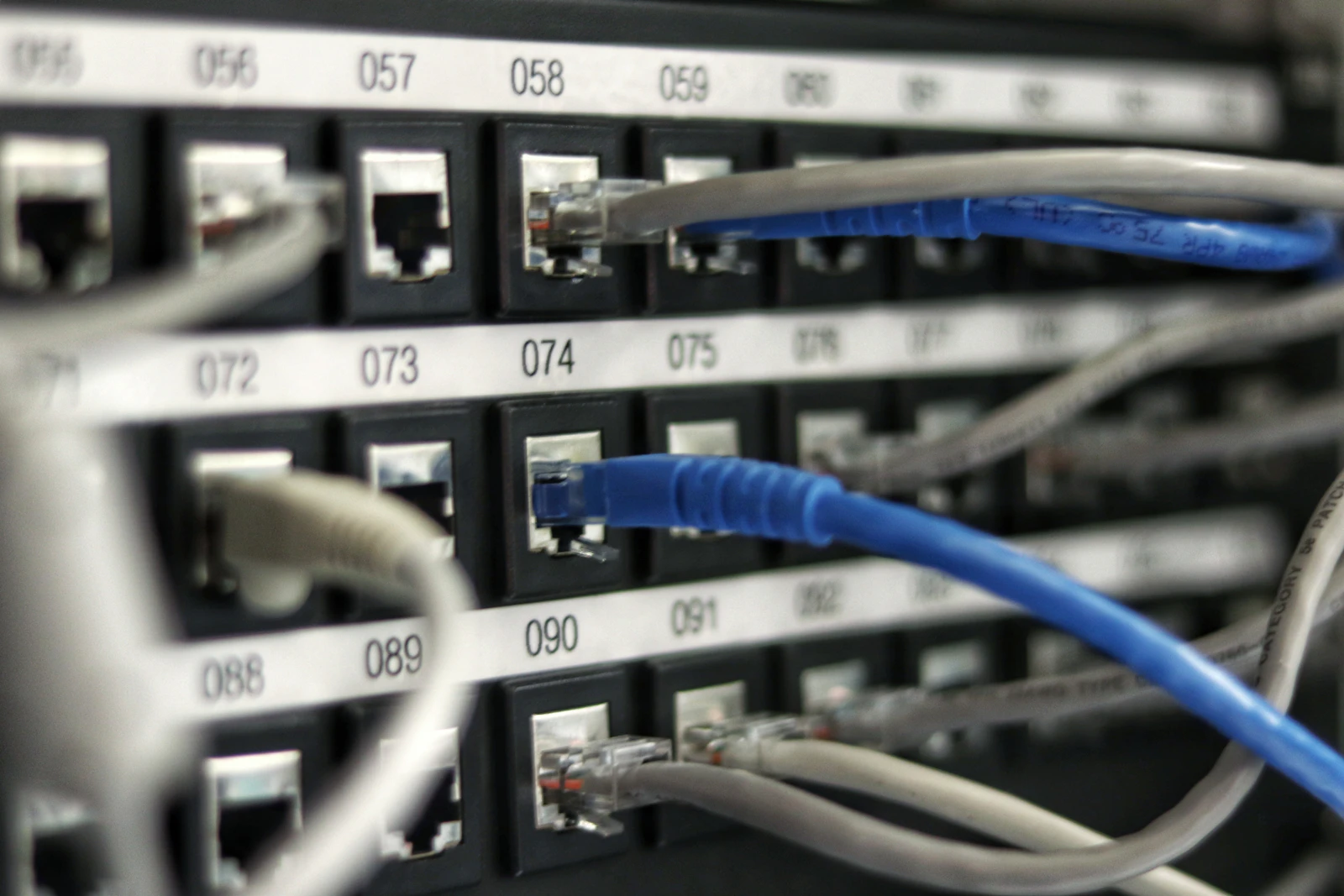
Municipalities are shifting from reactive cloud analytics to decentralized edge AI systems capable of autonomous, split-second decision-making across urban infrastructure.
Beyond the Centralized Dashboard
For more than a decade, the standard blueprint for smart cities rested on a centralized premise. Municipalities deployed vast sensor arrays across transit corridors, water mains, and power grids, streaming gigabytes of raw telemetry back to central cloud repositories. Operators sat in integrated operations centers, watching aggregated dashboards and manually dispatching crews or tweaking control parameters after anomalies occurred.
That architecture is now showing its limits. As sensor densities climb into the tens of thousands per square kilometer, streaming raw high-definition video, lidar, and acoustic data to distant commercial clouds incurs prohibitive transit and storage fees. More critically, round-trip latency makes centralized architectures ill-suited for real-time safety interventions. A traffic management system that takes several seconds to ingest camera frames, run cloud inference, and return an updated signal phase cannot prevent an imminent collision or clear an immediate path for an approaching emergency vehicle.
To solve this, urban engineering is pivoting toward edge-native intelligence. Instead of treating street-level hardware as passive data collectors, municipal authorities are transforming nodes into localized compute engines. By hosting neural network inference directly on roadside units, utility substations, and cellular base stations, cities are trading passive observation for low-latency cognitive action.
The Architecture of Cognitive Urban Nodes
Transitioning from telemetry collection to local execution requires a specialized hardware and software stack. At the street level, edge devices must withstand extreme temperature fluctuations, vibrations, and moisture while delivering sufficient compute density to run multi-modal AI models.
Modern cognitive edge nodes combine low-power system-on-chip architectures, dedicated neural processing units, and high-bandwidth local sensor interfaces. At a signalized intersection, for example, a single hardened edge appliance can ingest feeds from multiple four-kilowatt cameras, radar sensors, and pedestrian push-buttons simultaneously. Rather than streaming compressed video feeds to a cloud repository, the node runs quantized computer vision models locally. It extracts structural vector metadata, tracks trajectory vectors of vehicles and micro-mobility riders, and calculates collision risks in milliseconds.
Sensor fusion plays a central role in this architecture. Optical cameras frequently struggle in heavy rain, direct solar glare, or fog. By fusing camera streams with radar signatures and acoustic event detectors, edge models can reliably detect an incident, such as a fallen tree limb, a stalled delivery vehicle, or a blown water main, regardless of ambient conditions. Crucially, the raw sensory feed is discarded immediately after inference, retaining only high-level structured logs and alert triggers. This approach reduces backhaul bandwidth demands by up to ninety percent while resolving longstanding privacy concerns regarding continuous civic surveillance.
Closed-Loop Municipal Actuation
Generating real-time insights is only the first half of the cognitive equation. The true shift occurs when these localized systems close the loop, acting directly on the physical environment without requiring human confirmation for routine operational adjustments.
In transportation management, edge inference allows traffic signals to move beyond rigid time-of-day schedules or rudimentary inductive loop triggers. Cognitive intersection controllers dynamically modulate green-light intervals based on real-time queue lengths, vehicle velocities, and pedestrian approach rates. When an emergency vehicle approaches, vehicle-to-everything communications paired with visual tracking allow the edge controller to hold conflicting movements and create an uninterrupted green corridor, returning to balanced timing plans the moment the responder passes.
Similar closed-loop mechanisms are taking root in municipal utility networks. Aging water distribution systems lose billions of liters annually to undetected leaks. Traditional acoustic loggers identify anomalies days after a rupture begins, requiring manual field audits to pinpoint the breach. Contemporary edge setups attach micro-controllers running lightweight acoustic inference models directly to fire hydrants and pressure-reducing valves. When the characteristic acoustic profile of a high-pressure pipe fracture appears, the local unit can signal automated shutoff actuators to isolate the affected sector within seconds, preventing catastrophic road washouts.
In local energy grids, edge computing coordinates distributed energy resources. As residential solar arrays, commercial battery installations, and electric vehicle charging depots proliferate, substations face severe voltage volatility. Localized AI controllers monitor phase balance and power factors at the transformer level, executing sub-second battery charging adjustments or inverter curtailments to prevent localized brownouts without waiting for instructions from a regional transmission operator.
Operational Realities and Field Maintenance
Distributing thousands of intelligent nodes across a city creates significant operational and maintenance hurdles. Unlike clean, climate-controlled enterprise data centers, street furniture offers hostile environments for complex computing equipment. Road salt, dust accumulation, power surges, and physical impacts require ruggedized enclosures and industrial-grade thermal dissipation designs.
Firmware and model lifecycle management also present logistical risks. Deploying updated neural network weights across thousands of remote devices over intermittent cellular connections requires robust over-the-air orchestration pipelines. If an update corrupts an edge node controlling an intersection, the system must immediately fall back to a hardwired, fail-safe state to prevent gridlock or collisions.
Security architecture must evolve in parallel. While edge architectures limit the blast radius of a central database breach, they dramatically expand physical attack surfaces. A compromised roadside cabinet or pole-mounted camera could serve as an ingress point to municipal operational technology networks. Hardening edge nodes demands zero-trust architectures, hardware root-of-trust chips, encrypted model weights, and mutual transport layer security authentication for every north-south and east-west network handshake.
As recently highlighted in technical analyses by IEEE Spectrum, navigating this leap from data gathering to automated, cognitive municipal systems depends not merely on faster chips, but on rigorous software verification and resilient fail-over design.
Why It Matters
For enterprise infrastructure operators, telecommunications providers, and data center engineers, the migration toward cognitive urban edge systems represents a fundamental shift in where and how computing resources are managed.
Telecommunications operators are transforming traditional base stations and central offices into micro edge data centers. By co-locating multi-access edge computing capacity alongside municipal infrastructure, telcos can offer low-latency inference services as a managed utility to transit agencies and city departments. This integration creates demand for specialized fiber backhaul, local edge caching, and hybrid power management systems capable of sustaining compute nodes through grid fluctuations.
For field technicians and systems integrators, the nature of installation and servicing is changing. Installing urban infrastructure is no longer just about running conduit and terminating copper lines. Field teams must now configure edge AI acceleration hardware, validate local sensor calibration, and troubleshoot containerized model runtimes on pole-mounted units. Maintenance workflows increasingly rely on augmented reality diagnostic tools that overlay real-time sensor health and localized inference metrics onto the technician's field display, cutting downtime and ensuring that the physical and digital layers of the city operate in sync.
More from Trends
RSS
Autonomous AI Agents Step In to Direct Physical Scientific Discovery
Agentic AI is moving from literature search to physical labs, orchestrating simulations, robotic hardware, and iterative experiments to accelerate scientific discovery.

Europe's Industrial Giants Split on How to Capitalise on the AI Boom
Schneider Electric, Siemens, and ABB are pouring billions into the AI infrastructure wave, but divide sharply over whether to acquire software or double down on heavy equipment.

Corporate Layoffs Accelerate as Enterprise Budgets Shift to Artificial Intelligence
Global employers across banking, software, and industry are eliminating tens of thousands of desk jobs to free up capital for intensive AI investments.