Europe's Industrial Giants Split on How to Capitalise on the AI Boom
Schneider Electric, Siemens, and ABB are pouring billions into the AI infrastructure wave, but divide sharply over whether to acquire software or double down on heavy equipment.

TL;DR: Europe's top industrial automation conglomerates are diverging in their multi-billion-dollar AI strategies, with Schneider and Siemens spending heavily on enterprise software while ABB bets that owning physical infrastructure offers superior returns.
The Split in Europe's Industrial Playbook
The global race to construct artificial intelligence infrastructure has provided an unprecedented commercial windfall for the companies that make modern electrification possible. While American hyperscalers dominate foundational AI models and cloud software, the physical backbone of the industry remains anchored in industrial engineering. Modern artificial intelligence facilities cannot function without specialised high-voltage switchgear, continuous cooling loops, busways, and complex power distribution networks.
Europe's three pre-eminent industrial conglomerates, Schneider Electric, Siemens, and ABB, find themselves sitting at the centre of this capital surge. All three have raised financial guidance as orders from hyperscale data centre developers continue to climb. Yet as these groups determine how to allocate their growing cash reserves, a fundamental philosophical rift has opened between them.
On one side stand Schneider Electric and Siemens, which are executing multi-billion-dollar software acquisitions to reposition themselves as hybrid industrial technology providers. On the other stands Swiss engineering leader ABB, which is deliberately avoiding expensive software buyouts in favour of acquiring high-precision hardware manufacturers, choosing instead to write its operational software in-house. The divergence illustrates conflicting answers to a central question confronting modern industry: does real long-term pricing power sit in the operational software that orchestrates infrastructure, or in the specialised physical equipment that keeps the power flowing?
Software-First: Schneider and Siemens Chase Digital Architecture
The software-centric faction argues that mechanical hardware will inevitably face margin pressure unless it is deeply coupled with proprietary design and lifecycle management platforms. France's Schneider Electric demonstrated the sheer scale of its conviction with its near-$24 billion acquisition of American engineering software company PTC. The transaction represents the largest cross-border corporate acquisition from Europe into North America in several years.
Schneider aims to connect its physical catalog, spanning uninterruptible power supplies, medium-voltage switchboards, and chilled-water systems, with PTC's computer-aided design and product lifecycle management suites. The strategic thesis focuses on the creation of a closed loop: engineers design facilities and mechanical systems using software, deploy Schneider equipment, and continuously feed telemetry back into algorithmic models that govern predictive maintenance and efficiency. Schneider leadership views this integration as the foundation of an industrial artificial intelligence powerhouse.
Financial markets, however, responded with caution. Schneider's shares fell sharply following the announcement, reflecting investor apprehension over the valuation multiple and the dilution of the company's core focus on energy management. Critics pointed out that large software acquisitions bring execution challenges, culture clashes, and the risk of overpaying at the peak of an investment cycle.
Siemens initiated this digital pivot long before its French rival. The German industrial flagship began transforming its identity nearly two decades ago with the purchase of UGS, steadily expanding its portfolio of industrial design, simulation, and factory automation platforms. Siemens deepened this trajectory with its $10 billion purchase of Altair Engineering, a company specialising in computational fluid dynamics and multi-physics simulation software. For Siemens, hardware and software are no longer distinct business units. The group maintains that physical components, whether industrial drives or high-speed rail switches, must exist as digital twins long before they are cast in metal and bolted to the floor.
Hardware-First: ABB Bets on Iron, Copper, and In-House Code
ABB has taken the opposing path, deliberately resisting the impulse to chase major software balance-sheet acquisitions. The Zurich-based engineering group has instead directed its capital toward traditional physical engineering assets, exemplified by its $5.5 billion acquisition of British industrial actuator and flow control maker Rotork.
ABB's leadership has been outspoken about the risks of software empire-building. The company argues that paying astronomical multiples for technology companies outside its traditional core creates unneeded operational risk. Rather than buying established software companies, ABB relies on an internal workforce of roughly two thousand software engineers to develop the proprietary algorithms, firmware, and telemetry interfaces required to operate its physical machinery.
This capital discipline has yielded strong equity performance. Investors have rewarded ABB for preserving its balance sheet and avoiding high-risk integration projects. By concentrating on high-barrier physical components, such as specialised electric motors, drives, and substation infrastructure, ABB has managed to protect high profit margins without carrying the valuation overhang associated with software conglomerates. Its position suggests that market dominance in essential physical equipment provides robust pricing power, even in a digital world.
The Battle for the Data Centre Power and Cooling Stack
Underpinning both strategies is an immediate, practical driver: the unprecedented expansion of server infrastructure required to train and run machine learning models. As computing density rises, artificial intelligence clusters place extreme strains on local utility grids and thermal management systems, turning utility gear and cooling loops into primary operational bottlenecks.
Schneider currently commands the largest direct exposure to this sector among the European triad. Roughly a quarter of its revenue, amounting to approximately €10 billion, flows from data centre infrastructure. The company has secured an extensive presence across both hyperscale environments and colocation facilities by bundling uninterruptible power units, liquid cooling distributors, and rack-level power monitoring.
ABB maintains a substantial presence as well, reporting that its equipment serves roughly one in four data centres worldwide. This hardware exposure accounts for approximately $3 billion in revenue, representing about 10 per cent of its aggregate business. ABB's medium-voltage distribution systems, switchgear, and microgrid controllers are critical elements in keeping facilities operational during unexpected utility brownouts.
Siemens has reported a similar surge in demand, with data centre revenues climbing past €3 billion over a nine-month period, up roughly 50 per cent year-on-year. While server hardware and graphics processors command the most public attention, facility managers cannot commission a single server rack without the switchgear, circuit breakers, and cooling automation manufactured by these three European suppliers.
The Prize of Industrial AI: Operational Telemetry Meets the Physical World
Beyond the immediate rush to supply data centres with electricity and cooling lies a far larger, structural prize: the deployment of artificial intelligence directly into factories, chemical refineries, electrical grids, and supply chains. While consumer technology companies train models on public internet text and imagery, industrial operational technology relies on proprietary, physical data points that are largely inaccessible from the public web.
Decades of telemetry gathered from vibration sensors, pressure valves, heat exchangers, and robotic assembly cells represent the training data for the next phase of automation. The company that can successfully bridge hardware telemetry with predictive models could transform plant maintenance and production planning.
In chemical manufacturing, automotive assembly, and aerospace production, industrial AI promises to detect subtle material flaws, continuously recalculate energy efficiency, and automate routine repairs before physical breakdowns trigger catastrophic outages. The strategic conflict between Schneider, Siemens, and ABB will ultimately be decided by which model unlocks this telemetry most effectively. Schneider and Siemens are betting that owning the overarching design and analytics software layers will allow them to capture the lion's share of operating margins. ABB is betting that the telemetry belongs to the machine, and that the company manufacturing the most reliable, precise physical hardware will retain control over the customer relationship.
As recently examined in reporting by the Financial Times, this strategic split comes at a rare moment of European industrial strength, where physical engineering assets provide a formidable moat that Silicon Valley cannot readily replicate.
Why It Matters
For enterprise operators, network architects, and field technicians, this corporate divergence will directly influence day-to-day operations on the ground. As data centre designs move toward liquid cooling and megawatt-scale power envelopes, facility engineers are facing unprecedented operational complexity.
If the software-heavy vision championed by Schneider and Siemens succeeds, field technicians will increasingly rely on augmented reality interfaces, integrated digital twins, and autonomous diagnostic platforms that blend facilities engineering directly with enterprise IT stacks. In this model, troubleshooting a tripped breaker or a malfunctioning heat exchanger begins inside a simulation engine that prescribes physical workflows before a technician ever steps foot onto the plant floor.
Conversely, if ABB's hardware-first thesis proves superior, operations will remain centred on robust, modular physical equipment with simplified, native code interfaces. In that scenario, facility owners retain greater flexibility to choose independent analytics platforms without being locked into a single proprietary software ecosystem. In either case, the convergence of machine learning and physical infrastructure proves that the future of artificial intelligence will not be decided solely in cloud data centres, but also by the heavy equipment and frontline engineering teams deployed across the physical world.
More from Trends
RSS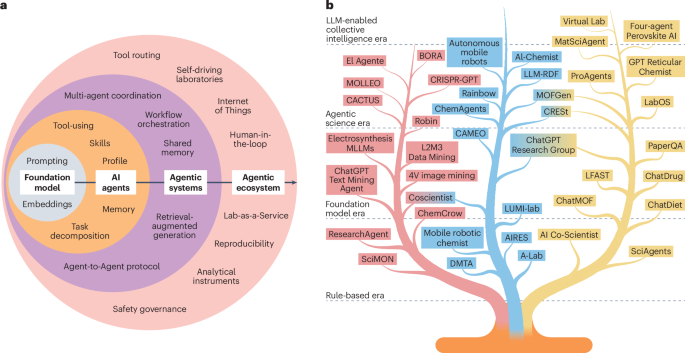
Autonomous AI Agents Step In to Direct Physical Scientific Discovery
Agentic AI is moving from literature search to physical labs, orchestrating simulations, robotic hardware, and iterative experiments to accelerate scientific discovery.

Corporate Layoffs Accelerate as Enterprise Budgets Shift to Artificial Intelligence
Global employers across banking, software, and industry are eliminating tens of thousands of desk jobs to free up capital for intensive AI investments.
From Observation to Autonomy: How Edge AI Is Reshaping Smart City Infrastructure
Cities are moving past centralized data lakes toward cognitive edge architectures that process sensor data locally, enabling autonomous, real-time civic operations.