Enterprise AI Shifts the Center of Gravity in Core Business Software
Enterprises are transforming back-office software from passive systems of record into active decision engines, pushing integration partners to deliver measurable AI workflows.

Enterprise adoption of artificial intelligence is transforming legacy back-office systems into active decision-making engines, requiring service providers to deliver measurable operational outcomes rather than simple software rollouts.
From Systems of Record to Guided Decision Engines
For more than two decades, enterprise resource planning and human capital management software operated primarily as administrative filing cabinets. Their fundamental purpose was to log transactions, track employee records, manage payroll schedules, and balance general ledgers. While these platforms provided dependable historical databases, they demanded significant manual intervention to extract insights, resolve discrepancies, and direct staff toward the next logical step.
That dynamic is changing rapidly across corporate America. Driven by advancements in automated intelligence and machine learning, major corporate operating platforms such as Workday are shifting from passive repositories into active operating layers. Organizations are no longer content with software that merely documents what happened yesterday. Instead, leadership teams expect their platforms to analyze live data, recommend strategic moves, and automate high-volume processes across finance and human resources.
This evolution represents a structural pivot from transaction processing toward guided operational execution. In practice, this means enterprise tools are expected to forecast staffing shortages before they occur, identify budget variances in real time, and route complex approvals automatically based on organizational policies. Rather than expecting managers to dig through layered spreadsheets and dashboard reports, systems are being reconfigured to deliver contextual recommendations directly into day-to-day managerial workflows.
The Push for Enterprise Platform Consolidation
As organizations push for greater intelligence, they are running directly into the limits of fragmented enterprise architecture. Over years of rapid digital expansion, many companies accumulated a patchwork of disconnected software packages. Human resources, corporate finance, operational planning, talent analytics, and field resource management often lived in separate vendor environments, each with its own data silo, access controls, and maintenance cycles.
This fragmentation creates friction that cripples automated workflows. Machine learning algorithms require broad, clean, and harmonized data sets to deliver reliable forecasts. When employee headcount records do not match operational payroll systems, or when project budgeting tools fail to communicate with real-time labor scheduling, automated decision engines either fail or produce flawed recommendations.
Consequently, platform consolidation has become a dominant objective for enterprise technology leaders. Businesses are deliberately retiring point solutions to unite human capital management, financial planning, enterprise reporting, and operational intelligence under single architectural umbrellas. By establishing unified data models, organizations eliminate the expensive middleware and recurring maintenance fees associated with legacy integrations. More importantly, this consolidation creates a single version of operational truth, providing the structured foundation required for reliable enterprise machine learning.
While large enterprises are primarily occupied with expanding and consolidating their current installations, mid-sized companies are increasingly adopting these unified cloud platforms. Midmarket organizations often lack the sprawling IT budgets required for prolonged custom software engineering. To stay competitive, they are adopting preconfigured architectures that allow them to deploy integrated finance and workforce intelligence tools with lower upfront friction.
What Buyers Now Demand from Implementation Partners
This technological realignment has altered the relationship between enterprises and third-party systems integrators. In the past, external consultancies were hired to execute linear technical installations. A service partner was judged primarily on whether it could bring a software instance live on schedule, migrate legacy databases, configure standard modules, and deliver basic administrator training.
Today, technical deployment is viewed as table stakes. Enterprise clients are evaluating system integrators based on their capacity to generate continuous business value long after initial deployment. Companies want partners that can construct dynamic digital roadmaps, design bespoke integrations through low-code development platforms such as Workday Extend, and systematically optimize software environments to support emerging machine learning tools.
Crucially, user adoption and organizational change management have taken center stage. Sophisticated automated workflows yield zero return on investment if operational teams reject the new software or default to manual workarounds. Modern advisory contracts therefore place heavy emphasis on practical change management, ongoing process refinement, and clear metrics showing improvements in productivity, cycle times, and operational cost reductions.
Data Integrity and the Governance Bottleneck
Despite widespread enthusiasm for intelligent enterprise systems, several structural bottlenecks continue to stall deployment timelines. Chief among these hurdles is internal data quality. Decades of unstandardized operational logs, duplicate employee files, and inconsistent naming conventions plague corporate databases. Training predictive models or deploying autonomous agents on messy baseline data leads directly to erroneous conclusions, which can damage compliance or undermine financial reporting.
Integration complexity presents a parallel challenge. Even within consolidated architectures, core operational platforms must interface cleanly with customer management systems, operational field databases, external payroll providers, and legacy infrastructure. When these external data connections lag or break, decision engines lose their real-time perspective.
At the same time, enterprise boards are intensifying their scrutiny of algorithmic governance. Companies face mounting regulatory and legal exposure concerning algorithmic bias, data privacy, and intellectual property protection. Automated recommendations regarding compensation, promotions, headcount adjustments, and capital expenditure must be transparent, explainable, and fully auditable. As a result, businesses are dedicating significant portions of their software budgets to building internal compliance frameworks, audit trails, and data governance policies before turning on autonomous platform capabilities.
The Shifting Landscape of Service Providers
These market dynamics were examined in depth by global research and advisory firm Information Services Group, according to market reporting published by the Financial Times. The research details how corporate demand is reordering the competitive field among systems integrators, enterprise advisors, and technical service vendors.
The analysis points out that the vendor ecosystem is bifurcating between traditional system installers and holistic transformation partners. Leading global consultancies and specialized boutique firms are investing aggressively in proprietary accelerators, pre-built industry templates, and dedicated automation labs to differentiate their offerings. In parallel, service providers are being benchmarked not only on their technical depth, but also on customer satisfaction and long-term client enablement.
As corporate clients demand continuous optimization rather than one-off implementation projects, service firms that master the intersection of operational domain expertise, organizational change management, and automated platform design are capturing the largest market share.
Why It Matters
While discussions about enterprise AI often concentrate on corporate boardrooms and software suites, the consequences of this operational shift extend directly to frontline field operations, technical infrastructure, and telecom environments.
In heavy industry, telecommunications networks, and mission-critical data centres, workforce planning and operational execution cannot afford to exist in separate silos. Field technicians, maintenance engineers, and infrastructure operators rely on complex logistical choreography. Work schedules must align precisely with parts availability, regional network outages, customer service level agreements, and physical access permits.
When enterprise platforms evolve from static HR and accounting records into unified, real-time decision platforms, field operations become vastly more responsive. Dynamic scheduling engines can automatically pair specific technician certifications with urgent hardware anomalies inside a regional data facility. Automated finance workflows can approve emergency procurement orders for replacement fiber-optic transceivers in seconds rather than days. By connecting back-office human capital and financial systems with frontline operational reality, enterprises create a direct, automated link between administrative strategy and hands-on technical execution.
More from Trends
RSS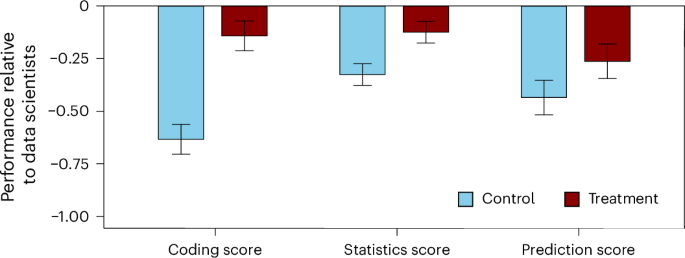
The Exoskeleton Dilemma: Why Generative AI Boosts Performance Without Building Skill
A randomized trial reveals that while AI helps non-specialists complete technical work, the capability vanishes the moment the tool is removed.

Anthropic Files for IPO, Revealing Rocketing Enterprise Revenue and $600 Billion in Compute Commitments
Anthropic's IPO filing shows revenue topping $16 billion in early 2026, paired with unprecedented long-term compute contracts and tightly held founder governance.
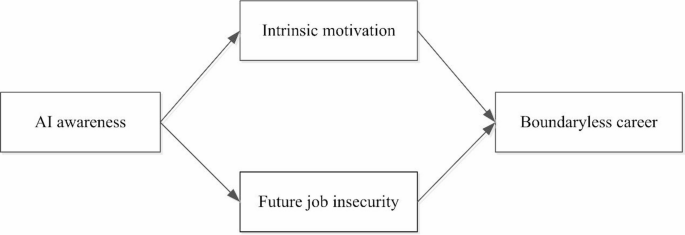
The Boundaryless Worker: How AI Awareness Is Rewiring Early Career Strategy
New research shows students aware of AI are abandoning traditional career ladders, propelled by equal parts technical curiosity and fear of automated displacement.