Industrial Food Production Tests the Limits of Factory Floor AI
AI is reshaping food manufacturing and safety inspection, but bridging the gap between lab benchmarks and messy factory environments remains an operational hurdle.
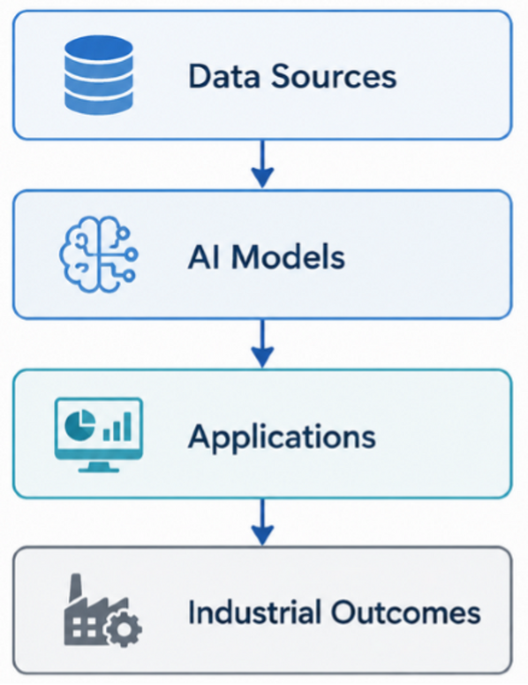
Machine learning is moving into commercial food processing and quality control, but algorithms proven in controlled research environments frequently struggle against the messy operational realities of factory floors.
Modern food processing facilities operate under intense pressure. Operators must balance strict hygiene regulations, razor-thin profit margins, supply variability, and soaring energy costs. Historically, quality assurance has relied on destructive batch testing, periodic laboratory sampling, and visual spot checks carried out by plant workers. These methods are slow, labour-intensive, and inherently reactive, often catching defects or contamination only after substantial inventory has been processed or packaged.
Over the past five years, manufacturing lines have increasingly turned to machine learning, deep neural networks, and advanced sensing systems to reverse this dynamic. Rather than waiting for offline laboratory assays, plants are installing inline instrumentation to assess physical attributes, chemical composition, and microbiological risk in real time. The goal is a transition toward continuous, automated process control that reduces waste, protects consumer health, and stabilizes complex manufacturing runs.
Computer Vision and Hyperspectral Inspection at the Edge
The most visible transformation inside food facilities is taking place at inspection points. Standard RGB cameras, long used for basic geometric sorting and packaging alignment, are being superseded by multispectral and hyperspectral imaging arrays paired with deep convolutional neural networks.
Hyperspectral imaging captures electromagnetic data across dozens or hundreds of contiguous spectral bands, spanning the visible and near-infrared spectrum. When combined with computer vision models, these systems can look beneath the surface of agricultural produce, meat, and processed grains. Instead of merely checking for surface blemishes, algorithms evaluate moisture distribution, fat-to-protein ratios, sugar content, and early signs of tissue decay without contacting the product.
Deploying these systems at scale, however, presents steep computational challenges. Hyperspectral cameras produce massive data cubes for every item moving down a conveyor belt. Transmitting these high-volume streams to centralized cloud facilities introduces unacceptable latency and demands excessive bandwidth. As a result, manufacturing plants are increasingly turning to ruggedized edge compute appliances stationed directly beside production lines. These localized processing units run optimized inference models that extract spectral features and make split-second grading or diversion decisions before the item reaches the next mechanical station.
Optimizing Energy and Complex Biochemical Processes
Beyond visual grading, machine learning is increasingly tasked with managing the thermodynamics and biochemistry of food processing. Food production is inherently nonlinear. Raw agricultural inputs vary widely in moisture, density, and chemical composition depending on the season, weather, and supplier. Standard rule-based control systems often fail to adapt smoothly to this input drift, causing facilities to over-dry, over-heat, or over-process ingredients simply to maintain safety margins.
Machine learning models, particularly recurrent architectures and gradient-boosted decision trees, are proving effective at modeling these multi-variable relationships. In industrial drying operations, which rank among the most energy-intensive steps in grain and dairy powder manufacturing, algorithmic control has demonstrated measurable commercial gains. Real-time modeling of ambient humidity, exhaust temperature, and product moisture has allowed select facilities to cut industrial-scale drying energy consumption by 12.8% without sacrificing product quality.
Similar gains are emerging in commercial fermentation, such as brewing, cheese maturation, and the cultivation of functional proteins. These operations rely on delicate microbial ecosystems that are easily disrupted by minute fluctuations in feed rate, dissolved oxygen, or pH. Machine learning models trained on sensor telemetry can predict microbial kinetics, identify metabolic slowdowns hours before they show up in standard tests, and adjust feed pumps to keep yields consistent.
The Transferability Gap and Real-World Friction
Despite promising trials, the widespread adoption of artificial intelligence across food processing faces a persistent technical roadblock: models trained in pristine laboratory environments often fail when deployed on commercial lines.
Academic research frequently reports classification accuracies exceeding 98% for sorting produce, detecting adulteration, or flagging foreign materials. Yet when those same models are exposed to live factory environments, prediction errors climb dramatically. Factory floors are harsh environments for optical sensors and computational hardware. Vibration shifts camera alignment, dust coats lens elements, ambient lighting changes throughout the day, and conveyor speeds fluctuate under load.
More critically, biological raw materials do not conform to tidy statistical distributions. An edge model trained to detect fungal contamination on apples sourced from one agricultural region may fail entirely when presented with fruit from a different climate, soil profile, or cultivar. Retraining models to account for this natural variance requires continuous data collection, expert annotation, and rigorous model validation, processes that many food manufacturing plants are ill-equipped to support.
Regulatory uncertainty further slows adoption. Food safety decisions carry legal liability and public health consequences. Plant managers cannot easily replace proven chemical assays with black-box neural networks unless those models offer transparent audit trails, explainable decision rationales, and predictable failure modes.
From Reactive Monitoring to Autonomous Digital Twins
To overcome these transferability bottlenecks, industrial researchers are looking beyond isolated classification models toward integrated digital twins and multimodal foundation models. Rather than relying solely on vision or isolated temperature sensors, next-generation architectures combine streaming telemetry from acoustic sensors, thermal probes, intelligent packaging indicators, and inline spectroscopy into unified digital representations of the factory floor.
Digital twins allow plant engineers to simulate operational changes before executing them physically. A facility manager can evaluate how a 2% change in ambient humidity will affect baking consistency or cold-chain integrity across an entire distribution network. When coupled with explainable AI techniques, these systems help operators understand why an anomaly was flagged, bridging the trust gap between automated recommendations and floor technicians.
In highly automated environments, facilities are beginning to experiment with agentic workflows where software agents not only monitor processes but autonomously adjust valve pressures, oven temperatures, or sorter speeds. For now, most food facilities keep a human in the loop, using machine learning as a decision-support layer rather than granting full autonomy to algorithmic controllers.
As detailed in a comprehensive assessment published in Nature, the primary roadblock to realizing the full promise of food-sector AI is no longer a lack of algorithmic sophistication. Instead, the challenge lies in model governance, robust external validation across diverse operating conditions, and the engineering discipline required to maintain data pipelines in harsh physical settings.
Why It Matters
For industrial technicians, network engineers, and infrastructure operators, the digitization of food processing is rapidly shifting the operational baseline. Food plants are no longer simple mechanical environments; they are becoming sensor-dense edge computing nodes.
This shift demands robust on-site communications infrastructure. High-speed optical sorting and live telemetry streaming require low-latency private industrial networks, such as Wi-Fi 6 or private 5G, capable of operating reliably around stainless steel tanks, refrigeration units, and washdown zones. Field technicians will increasingly need hybrid skills, combining mechanical troubleshooting with the ability to maintain optical sensors, recalibrate machine vision pipelines, and monitor edge inference boxes.
For enterprise data infrastructure, the food sector represents a massive wave of previously untapped operational telemetry. Managing model drift across hundreds of remote plants requires scalable, distributed MLOps architectures that can push lightweight containerized updates to edge servers without interrupting continuous production lines. As food safety and sustainability regulations tighten globally, the ability to deploy, maintain, and verify AI at the industrial edge will separate resilient producers from their struggling competitors.
More from Trends
RSS
Silicon Valley's Capital Influx Is Reshaping Biomedical Science
A massive influx of software and AI wealth is transforming biomedical research, replacing slow grant cycles with computational models and private moonshots.

Rethinking the Black Box: Inside the Debate Over Neural Network Legibility
A fresh look at neural network inner workings suggests large models may be far easier to decode, monitor, and audit than previously thought.
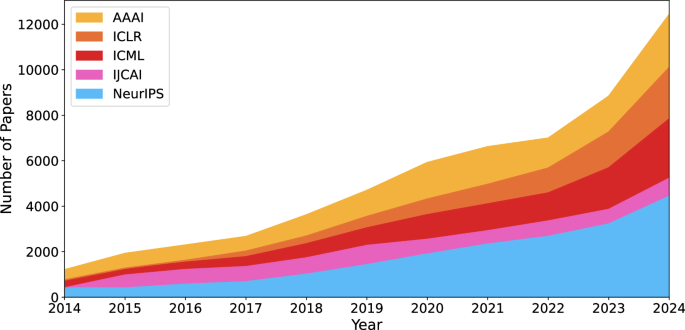
The Decade-Long Push to Make AI Research Actually Work
A ten-year study of 56,800 machine learning papers shows code and data sharing jumped from 11% to 64%, reshaping the foundations of practical AI deployment.