Silicon Valley's Capital Influx Is Reshaping Biomedical Science
A massive influx of software and AI wealth is transforming biomedical research, replacing slow grant cycles with computational models and private moonshots.

A flood of private capital from artificial intelligence and software fortunes is reshaping biomedical research, bypassing traditional institutional funding to prioritize computational models, cellular simulation, and moonshot biology.
A Wave of Tech Wealth Enters the Wet Lab
The biomedical research landscape is experiencing a structural shift in how basic discovery is financed. Over the coming years, impending liquidity events across frontier artificial intelligence laboratories, alongside existing software fortunes, are poised to create an unprecedented pool of private capital. Rather than channeling these resources purely into conventional real estate, private equity, or standard foundations, a significant contingent of technology leaders is directing their windfalls directly into life sciences.
Historically, technology founders have often turned to philanthropy, but the sheer scale of current capital allocations has changed the dynamics of the field. Entities like Altos Labs launched with an astounding three billion dollars in initial capital from investors including Yuri Milner and Jeff Bezos. This level of balance-sheet capitalization was granted to an early-stage venture focused on cellular rejuvenation without a single clinical drug candidate in its pipeline. Concurrently, the Chan Zuckerberg Initiative, established by Mark Zuckerberg and Priscilla Chan, has already deployed roughly four billion dollars into foundational scientific tools, with commitments to spend billions more over the coming decade.
These interventions are not isolated vanity projects. They represent an intentional attempt to export Silicon Valley operational frameworks into the wet lab. Founders who made their fortunes on software iterations, network effects, and scalable compute now see human biology as the next major information system waiting to be deciphered and reprogrammed.
Bypassing Traditional Scientific Bureaucracy
At the core of this philanthropic shift is a growing impatience with government funding mechanisms. For decades, the primary engine of academic biology in the United States has been the National Institutes of Health. While public funding remains the bedrock of medical discovery, its grant allocation process is notoriously conservative. Investigators spend months writing complex grant proposals, often pitching projects that already have preliminary results to satisfy risk-averse peer review panels.
Tech-backed institutions operate on a fundamentally different cadence. Organizations like the Arc Institute, established in California with extensive backing from technology entrepreneurs, provide multi-year, unconstrained funding directly to researchers rather than requiring proposal approvals for individual experiments. The premise is straightforward: remove administrative overhead, eliminate the grant-writing treadmill, and allow elite scientists to pursue high-risk, high-reward inquiries that traditional peer review committees might dismiss as speculative.
Similarly, modern donors are altering the corporate structures used for scientific giving. Rather than relying solely on tax-exempt 501(c)(3) foundations, multiple industry figures have structured their initiatives as limited liability companies. This vehicle relinquishes certain standard tax deductions in exchange for sweeping flexibility. An LLC can directly fund university laboratories, launch spin-out commercial entities, invest in high-risk startups, and engage in policy advocacy, all under a single operational roof. This convergence of venture capital and philanthropic capital creates a fluid environment where basic discovery can transition into a commercial product with minimal friction.
Recasting Biology as a Computational Discipline
Perhaps the most defining trait of tech-led scientific funding is its emphasis on computing power. Traditional biology focuses heavily on observational experiments, wet lab assays, and chemical screenings. Silicon Valley benefactors, by contrast, tend to approach biology through the lens of data engineering, complex systems, and foundational machine learning.
This orientation is evident in recent portfolio commitments. The Chan Zuckerberg Initiative, for instance, has allocated 500 million dollars toward building predictive artificial intelligence models of the human cell. The goal is to simulate cellular behavior in silico, allowing researchers to predict how complex systems respond to pathogens, mutations, or drug candidates before conducting a physical experiment. In a parallel track, the non-profit arm of OpenAI announced an ambitious agenda pledging billions toward disease eradication and life sciences data infrastructure, including targeted capital for neurodegenerative disease research.
Private market investments mirror this computational thesis. Companies like Calico Life Sciences and Retro Biosciences, the latter backed heavily by OpenAI chief executive Sam Altman, are treating longevity and cellular senescence not as unavoidable natural laws, but as engineering bottlenecks. By processing genomic, proteomic, and transcriptomic data through advanced machine learning pipelines, these initiatives aim to compress research cycles that previously took decades into a matter of years.
The Governance Gap in Oligarchic Philanthropy
This influx of unvetted, directional capital has introduced serious ethical and strategic questions. Traditional academic grants, despite their institutional inertia, are bound by transparent peer review and accountable to public policy agendas. When private donors dictate the scientific agenda, research priorities inevitably mirror the personal interests, intellectual biases, and demographic concerns of the ultra-wealthy.
Critics point out that tech-funded science heavily favors fields such as radical life extension, neuro-technological interfaces, and predictive cellular modeling, while potentially underfunding public health infrastructure, chronic disease management, and practical healthcare delivery. Because philanthropic decisions occur behind closed boardroom doors, there is no democratic mechanism to ensure that capital flows toward the diseases that carry the highest global burden.
There is also the matter of technological self-interest. Many of the research initiatives funded by tech elites rely heavily on the precise tools, cloud platforms, and algorithmic architectures developed by the tech industry. In some respects, these grants serve to validate and expand the commercial footprint of machine learning infrastructure inside academia. As an investigative report by Nature recently highlighted, private donors operate with a level of freedom and lack of democratic oversight that contrasts sharply with the public sector, raising concerns about who ultimately reaps the rewards of these accelerated breakthroughs.
Why It Matters
For engineers, technicians, and infrastructure operators, the migration of tech billions into biomedical science is not an abstract academic trend. It represents a concrete shift in how industrial data infrastructure and laboratory operations are managed in the real world.
Simulating biological systems at the cellular level requires massive, high-throughput compute clusters that rival the largest generative AI training runs. This demand is accelerating the convergence of data centre operations and life sciences facilities. Specialized data centres must now support hybrid workflows, where petabytes of raw genetic sequencing data are transmitted via ultra-low-latency networks directly to high-performance computing clusters.
Moreover, the automation of biological discovery requires a new tier of field expertise. Technicians and automation engineers are increasingly tasked with deploying robotics fleets, high-precision microfluidic instruments, and continuous environmental monitoring systems inside autonomous laboratories. As computational biology outpaces traditional benchwork, the frontline workforce responsible for maintaining industrial power feeds, optical networks, and liquid-handling automation will be just as crucial to the next medical breakthrough as the scientists interpreting the models.
More from Trends
RSS
Industrial Food Production Tests the Limits of Factory Floor AI
AI is reshaping food manufacturing and safety inspection, but bridging the gap between lab benchmarks and messy factory environments remains an operational hurdle.

Rethinking the Black Box: Inside the Debate Over Neural Network Legibility
A fresh look at neural network inner workings suggests large models may be far easier to decode, monitor, and audit than previously thought.
The Decade-Long Push to Make AI Research Actually Work
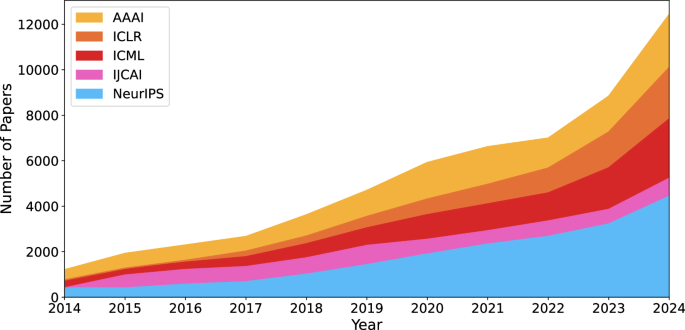
A ten-year study of 56,800 machine learning papers shows code and data sharing jumped from 11% to 64%, reshaping the foundations of practical AI deployment.