The Cold Vacuum Myth: Why Thermodynamics Crushes Orbital Data Centers
Silicon Valley dreams of launching AI data centers into orbit face an unyielding physical barrier: without air or water, dumping megawatts of heat in space is nearly impossible.

Putting AI data centers into low Earth orbit sounds like an elegant escape from terrestrial power and land constraints, but basic thermodynamics turns orbital heat rejection into an engineering nightmare.
The Seductive Myth of Deep Space Cooling
As artificial intelligence clusters devour record amounts of electrical power, tech executives and venture capitalists have begun looking upward. The pitch sounds compelling on a pitch deck. In low Earth orbit, photovoltaic arrays can capture intense, unfiltered sunlight around the clock without atmospheric absorption or cloud cover. Real estate costs vanish. Sovereign regulatory burdens, local zoning hearings, and terrestrial water consumption disappear in one stroke.
Promoters often add what sounds like an obvious thermodynamic bonus: outer space is cold. Surrounded by a cosmic background temperature hovering around 2.7 Kelvin, an orbital facility would seemingly have access to the ultimate heatsink. Entrepreneurs imagine launching megawatt-scale GPU clusters into orbit, letting solar arrays power the computation while the bitter chill of the void keeps processors frosty.
Yet this vision rests on an elementary misunderstanding of physics. Space is not cold in the way a refrigerated server room is cold. Space is empty. Because a vacuum contains virtually no matter, it provides neither conduction nor convection. On Earth, data centers reject heat by transferring thermal energy directly to matter, pushing hot air across finned heat sinks with high-velocity fans, or circulating chilled water through closed-loop liquid cooling blocks and cooling towers. In orbit, neither air nor water exists outside the hull. The only way to remove waste heat is thermal radiation, and the laws of radiative heat transfer make space computing far more difficult than its advocates admit.
Stefan-Boltzmann and the Low-Temperature Trap
The fundamental physics governing thermal radiation are defined by the Stefan-Boltzmann law. The total radiant heat energy emitted by a surface is proportional to the fourth power of its absolute temperature. When an object is incandescently hot, such as the filament of an old incandescent bulb or the nozzle of a rocket engine running at thousands of degrees, it sheds immense quantities of thermal energy into the void with ease.
High-density silicon processors do not have that luxury. Standard enterprise GPUs and accelerators must operate within a narrow thermal envelope, typically keeping junction temperatures below 85 to 100 degrees Celsius to prevent thermal throttling, leakage currents, and physical degradation. In absolute terms, 85 degrees Celsius is roughly 358 Kelvin.
Because radiative emission scales with the fourth power of temperature, a surface at 358 Kelvin radiates very little energy per square meter. At these temperatures, a blackbody radiator emits only a few hundred watts per square meter into open space. When accounting for real-world emissivity, view factors, solar radiation hitting the radiator surfaces, and infrared heat reflected from Earth itself, the net cooling capacity drops further.
Dumping the heat of a single high-performance rack consuming 40 to 100 kilowatts requires an absurdly large surface area. A megawatt-scale cluster, modest by terrestrial AI standards, would require thousands of square meters of delicate radiating panels. Instead of a compact satellite bus, an orbital data center becomes a sprawling, fragile expanse of piping and cooling panels, dwarfing the International Space Station.
The Mass and Plumbing Penalty
In aerospace engineering, mass and volume dictate every economic calculation. Every kilogram lifted into orbit represents fuel burned, rocket stages expanded, and capital deployed. Even with reusable launch vehicles driving down orbital insertion costs, the parasitic mass required to support computing hardware in space reverses any theoretical gains.
To move heat from densely packed compute nodes to sprawling external radiators, engineers must rely on complex active cooling systems. These systems require closed-loop pumped liquid lines, heat pipes, two-phase cooling loops, and high-reliability mechanical pumps that can operate continuously for years without maintenance. Every kilogram of coolant, manifold plumbing, structural trussing, and pump equipment adds to the launch manifest.
Deployable radiators introduce severe mechanical risks. They must be folded tightly to fit within a rocket payload fairing, then unfurled in orbit using motorized hinges and flexible fluid joints. Unlike solar panels, which are flat solid-state wafers wired with electrical copper, radiators carry pressurized volatile fluids. A single micrometer-sized piece of orbital debris penetrating a radiator panel could cause a catastrophic coolant leak, venting the working fluid into space and instantly killing the compute payload via thermal runaway.
Orientation creates another geometric headache. Radiators must point their active surfaces away from both the Sun and the Earth to prevent ambient radiation from overpowering their cooling capacity. Simultaneously, the facility's photovoltaic panels must stay pointed directly at the Sun to generate power. Designing a spacecraft with vast solar arrays that constantly track the Sun while equally vast radiator panels stay in perpetual shadow requires intricate gimbals, complex attitude control, and constant orbital maneuvering.
Compute vs Connectivity in Orbit
To understand why the orbital data center concept struggles, it helps to examine where satellites actually succeed. Constellations like Starlink and earth-observation platforms have transformed telecommunications and remote sensing. But these satellites perform tasks that inherently require an orbital vantage point. Starlink routes network packets between ground stations, while observation satellites snap pictures and beam raw telemetry downward.
These communication satellites consume relatively modest power, often only a few hundred watts to a few kilowatts per craft. Their internal electronics can reject waste heat through the surface area of the satellite bus itself. Moreover, customers pay a premium for low-latency global connectivity in remote regions where laying terrestrial fiber is economically impossible.
Data processing does not share these economics. The market does not pay a premium for an inference token or a neural network training run simply because the calculation occurred 500 kilometers above the atmosphere. Computation is fundamentally fungible. If an identical FLOP can be executed on the ground in Iceland, Virginia, or Texas for a fraction of the capital cost, an orbital cluster cannot compete.
Furthermore, high-throughput AI training requires massive, low-latency data exchange between nodes. Terrestrial data centers connect tens of thousands of accelerators via dense optical fiber fabrics running at hundreds of gigabits per second. Replicating that interconnectivity across free-flying satellites via optical inter-satellite links introduces synchronization jitter, orbital drift, and severe bandwidth bottlenecks. Loading terabytes or petabytes of training data into orbit creates an additional networking barrier that ground-based fiber backbones solved decades ago.
Terrestrial Reality Checks
If the primary argument for orbital compute is access to cheap solar energy and land, terrestrial geography already offers vastly superior alternatives. A developer who wants to power a data center entirely with continuous solar energy can build a massive solar farm in the Mojave Desert, northern Chile, or Western Australia.
Building in a terrestrial desert allows engineers to rely on conventional evaporative cooling, closed-loop dry chillers, or geothermal heat sinks. While desert environments can be harsh, they still offer an atmosphere that permits convective heat transfer. Technicians can drive to the site in a pickup truck, pull a faulty blade from a chassis, swap an optical transceiver, and replace a degraded coolant pump in twenty minutes. In orbit, a single stuck valve or corrupted solid-state drive is permanent.
As an insightful analysis published by IEEE Spectrum highlighted, discussions surrounding orbital data centers frequently gloss over the stubborn reality of thermodynamics. Space enthusiasts often treat orbital compute as an extension of the falling cost of rocket launches. However, launch costs are an economic constraint, whereas thermal radiation is a physical law. Halving launch prices does not change the Stefan-Boltzmann constant, nor does it shrink the radiator area required to cool a kilowatt of silicon.
There may eventually be niche applications for orbital compute, such as preprocessing raw synthetic aperture radar images or satellite sensor data directly in space to minimize downlink bandwidth. But the grand vision of moving massive cloud hyperscalers off the planet to bypass terrestrial energy and climate pressures remains thoroughly detached from the physics of heat dissipation.
Why It Matters
For enterprise infrastructure planners and data center operators, the orbital compute debate underscores a critical reality: the true bottleneck of modern AI is not raw chip design, but thermal and power management. As rack densities approach 100 kilowatts, the operational challenges seen in orbit mirror the problems engineers face on Earth.
Field technicians, mechanical engineers, and facilities teams are increasingly operating as thermodynamic specialists. The shift toward direct-to-chip liquid cooling, immersion tanks, and advanced heat reuse on the ground represents the real frontier of high-performance computing. While orbital concepts generate headlines, the practical future of AI infrastructure will be won or lost by the technicians and engineers mastering fluid dynamics and heat exchange right here on solid ground.
More from Trends
RSS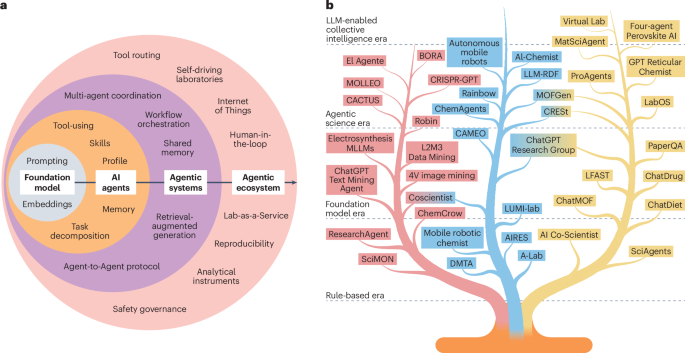
Autonomous AI Agents Step In to Direct Physical Scientific Discovery
Agentic AI is moving from literature search to physical labs, orchestrating simulations, robotic hardware, and iterative experiments to accelerate scientific discovery.

Europe's Industrial Giants Split on How to Capitalise on the AI Boom
Schneider Electric, Siemens, and ABB are pouring billions into the AI infrastructure wave, but divide sharply over whether to acquire software or double down on heavy equipment.

Corporate Layoffs Accelerate as Enterprise Budgets Shift to Artificial Intelligence
Global employers across banking, software, and industry are eliminating tens of thousands of desk jobs to free up capital for intensive AI investments.